CHAPTER 18
40 Trading Patterns — Zone and Timeframe Basis
The last two bases matter most: the zone decides where, the timeframe decides when and how much. These forty cards show both.
18.120 Patterns — Zone Basis
Premium, discount, OTE, session extremes, PDH/PDL, round numbers - each zone has its own rule. Read the pill to see which side belongs to which zone.
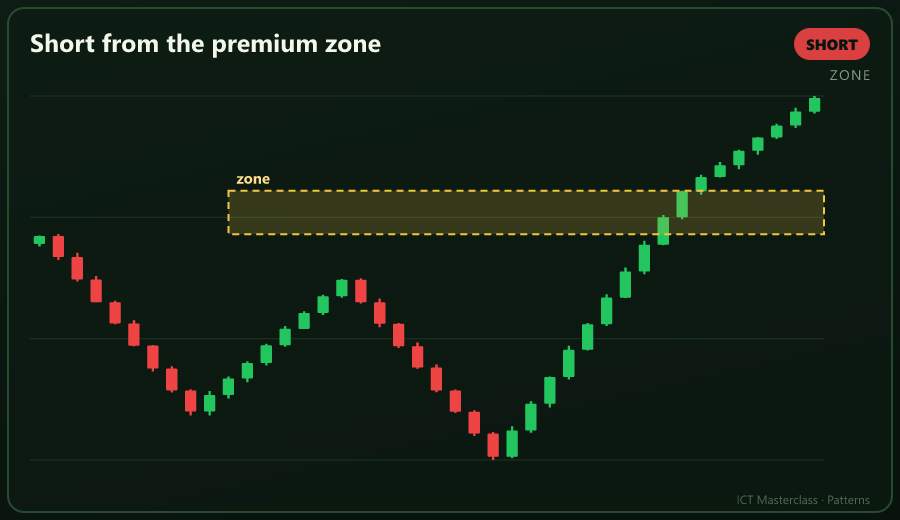
E1 Short from the premium zone
In the upper half only shorts, never longs.
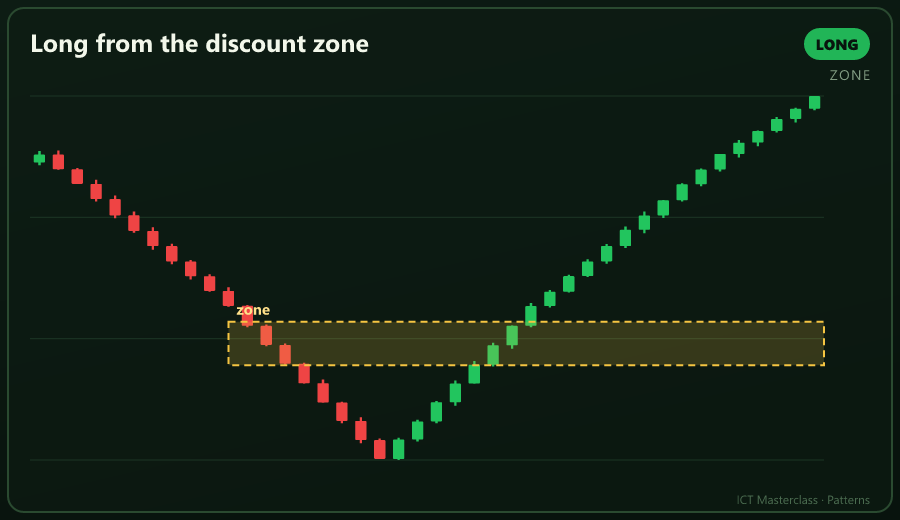
E2 Long from the discount zone
In the lower half only longs; shorts give poor R.
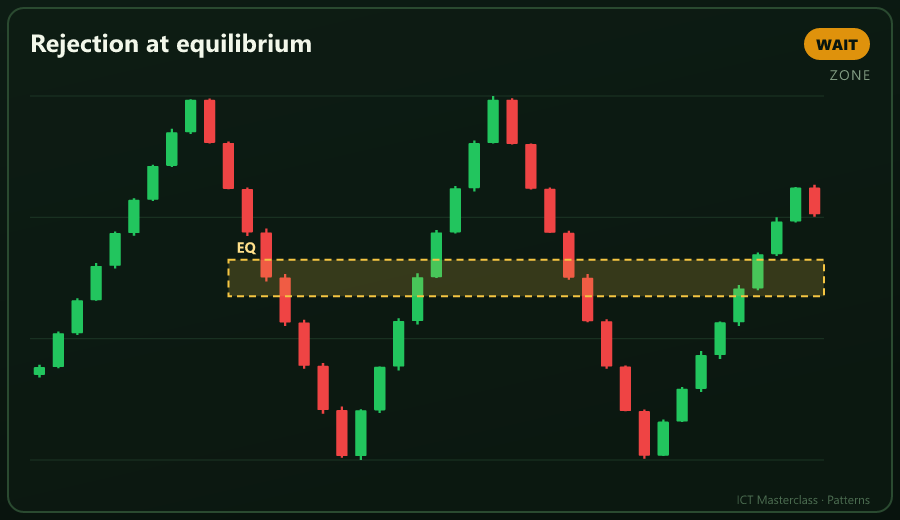
E3 Rejection at equilibrium
The 50 percent line is not an entry, only a boundary.
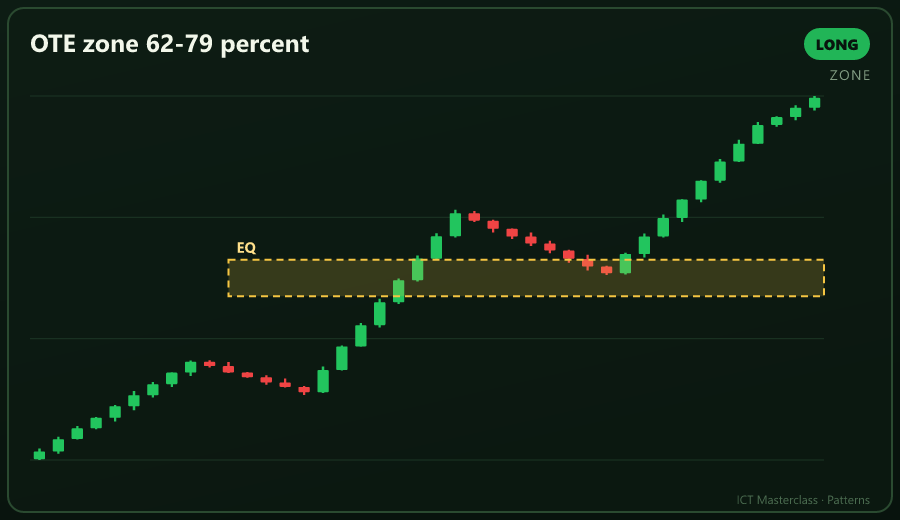
E4 OTE zone 62-79 percent
OTE on the BOS leg is the best price with the trend.
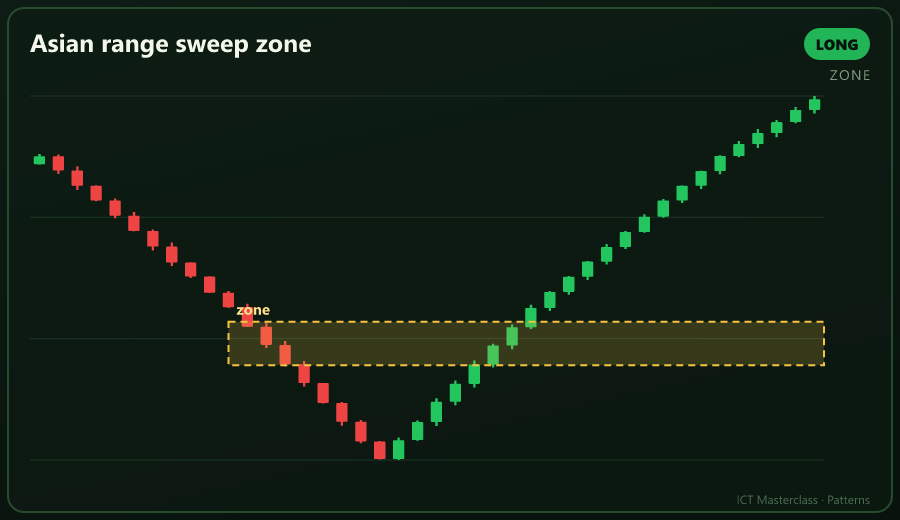
E5 Asian range sweep zone
Trade the reversal once one edge is swept.
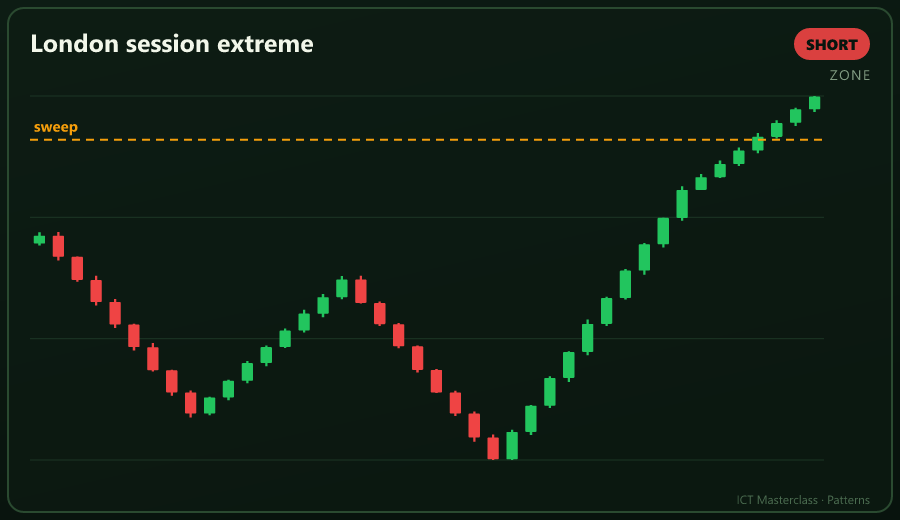
E6 London session extreme
The London high usually gets swept in New York.
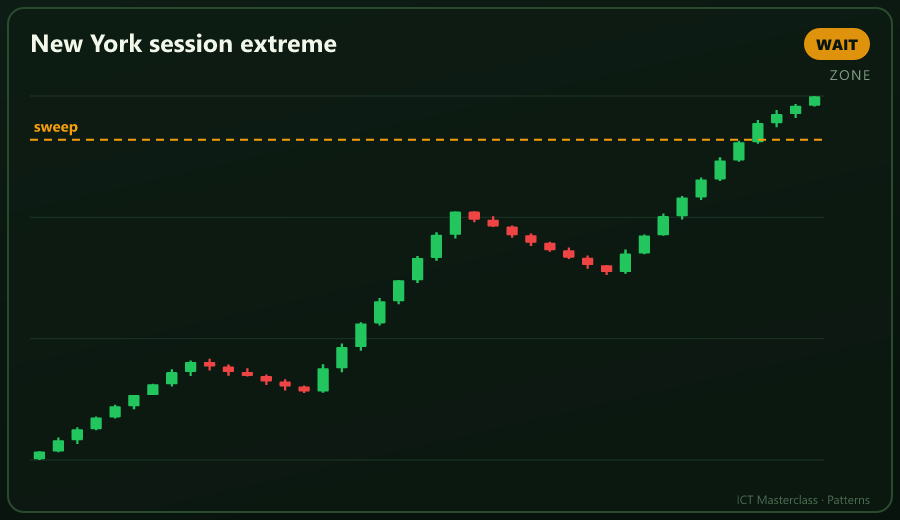
E7 New York session extreme
The last extreme of the day is tomorrow target, not an entry.
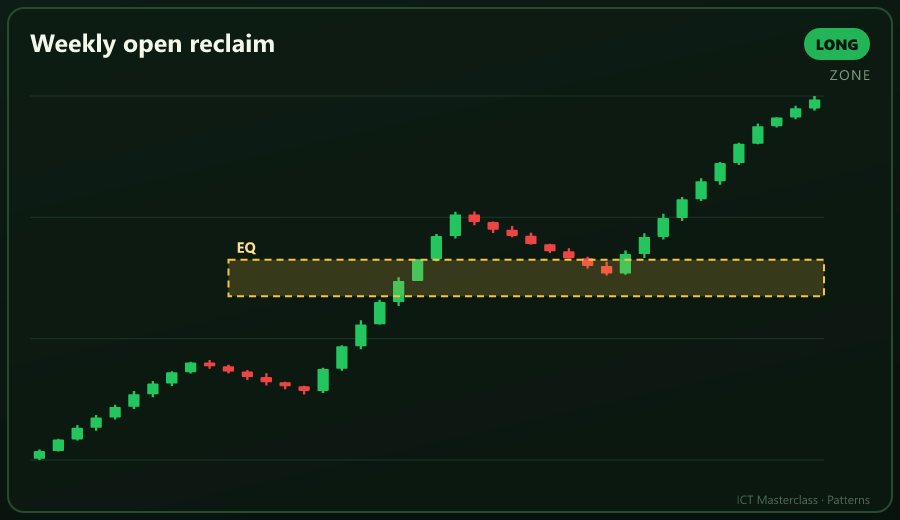
E8 Weekly open reclaim
A sweep below then a reclaim makes the week bullish.
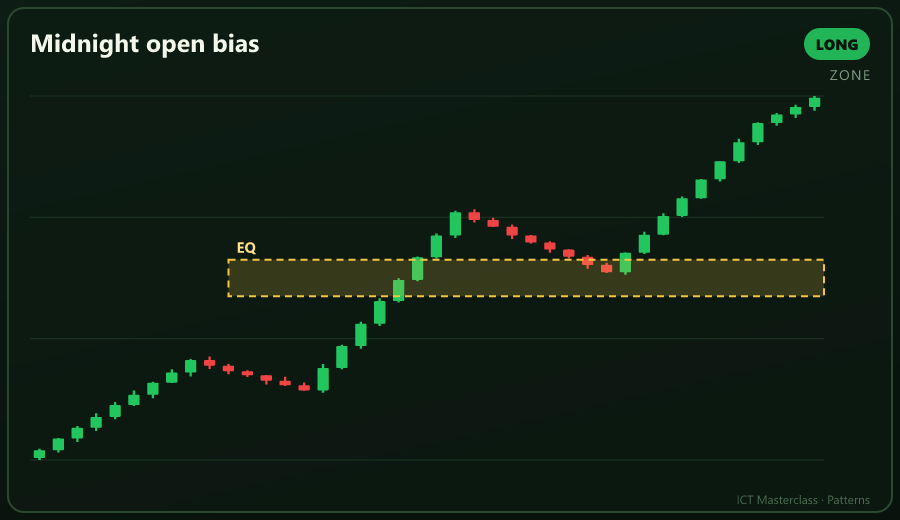
E9 Midnight open bias
Above the open is a premium day: buy the discount.
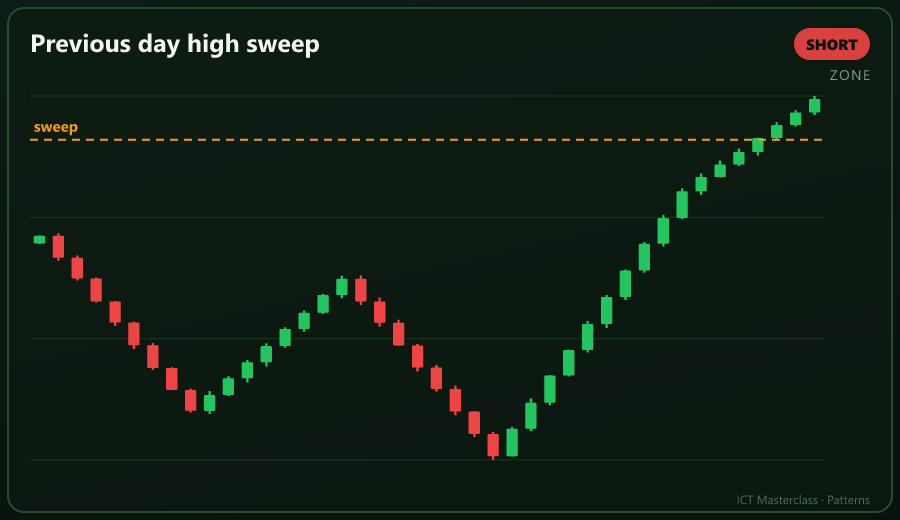
E10 Previous day high sweep
Once the PDH is taken, look the other way.
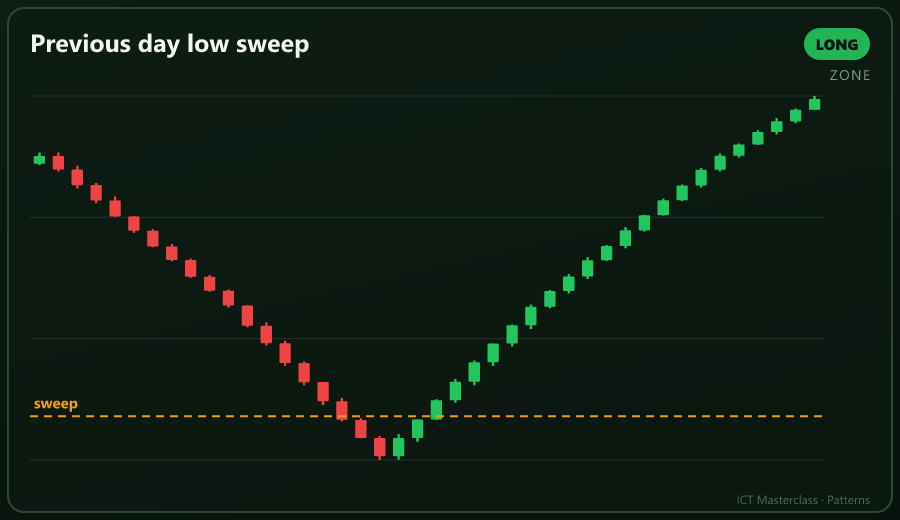
E11 Previous day low sweep
A PDL sweep takes sell stops; look for longs.
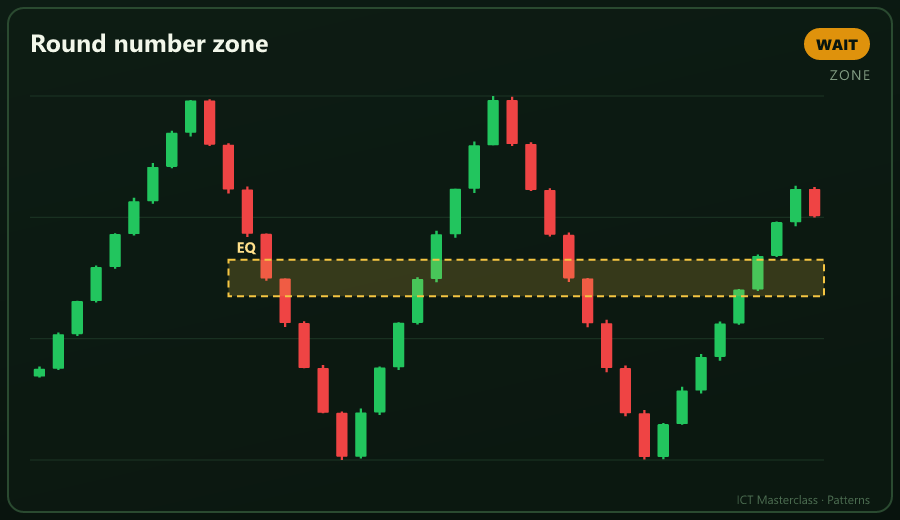
E12 Round number zone
Orders gather at round numbers, but you still need a trigger.
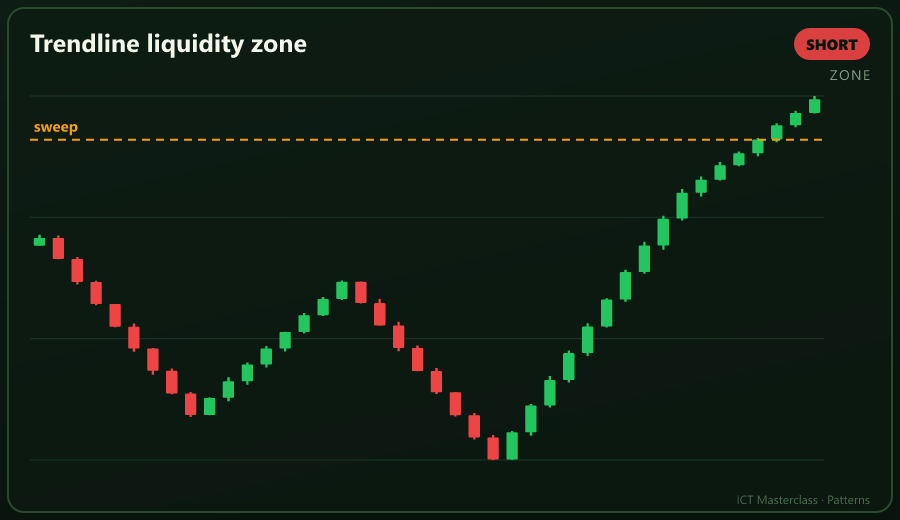
E13 Trendline liquidity zone
A line break takes liquidity; short the return.
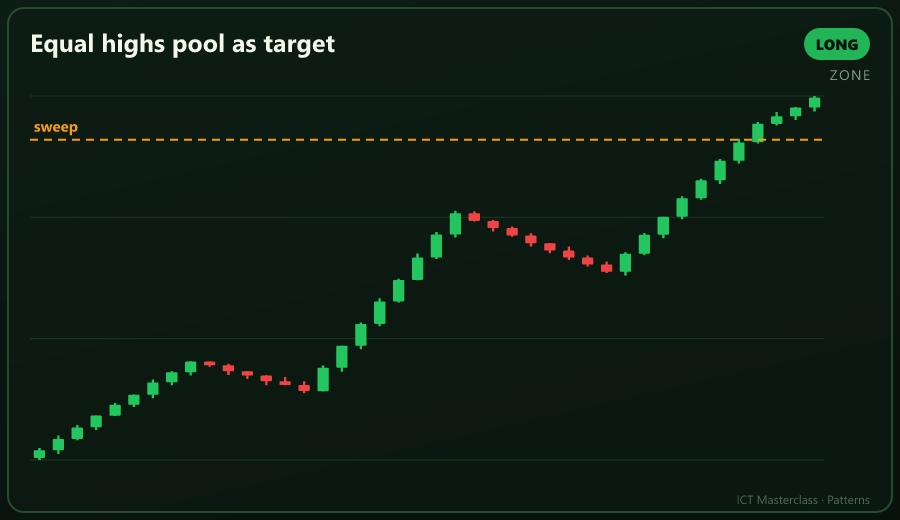
E14 Equal highs pool as target
Equal highs are a TP, never an entry.
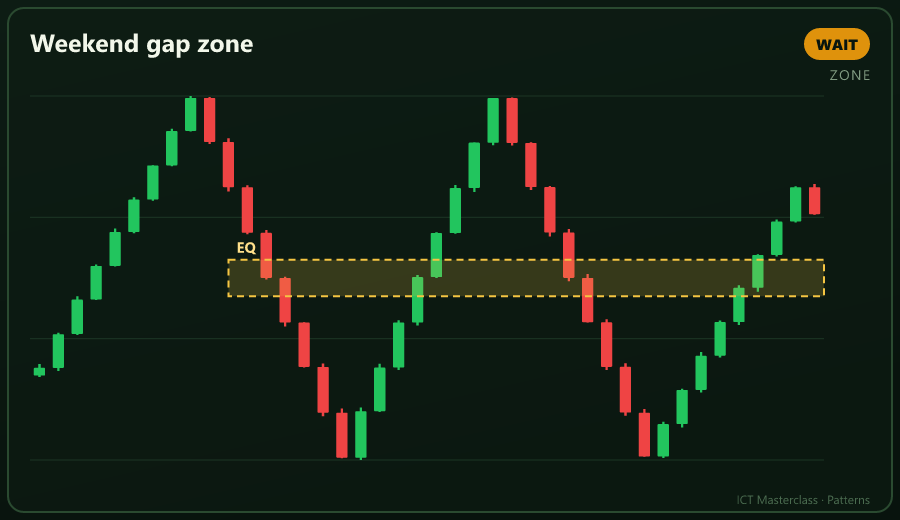
E15 Weekend gap zone
The gap usually fills, but the timing is uncertain.
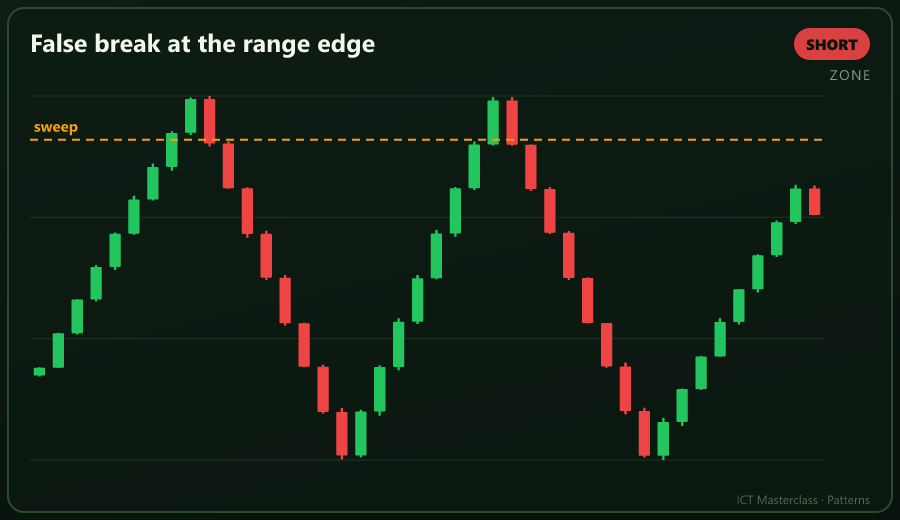
E16 False break at the range edge
A break that returns inside means the range wins.
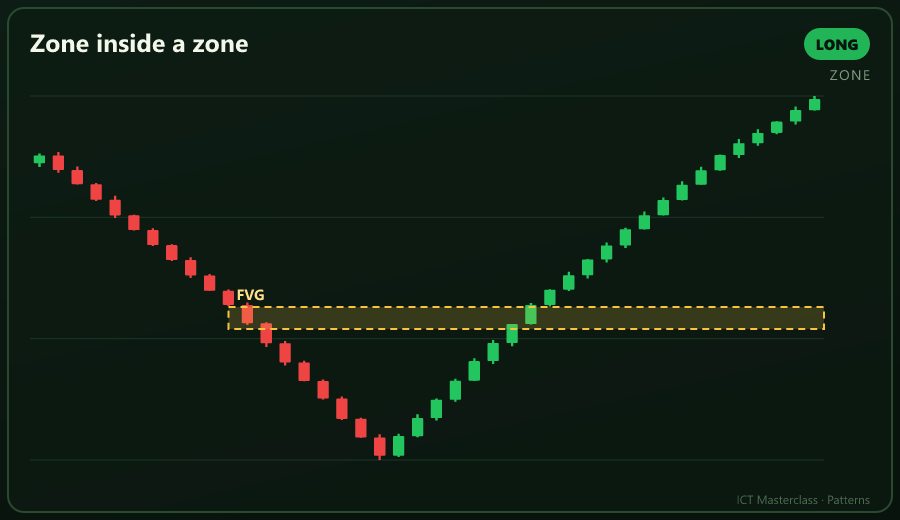
E17 Zone inside a zone
The smaller zone inside the bigger one is the precise entry.
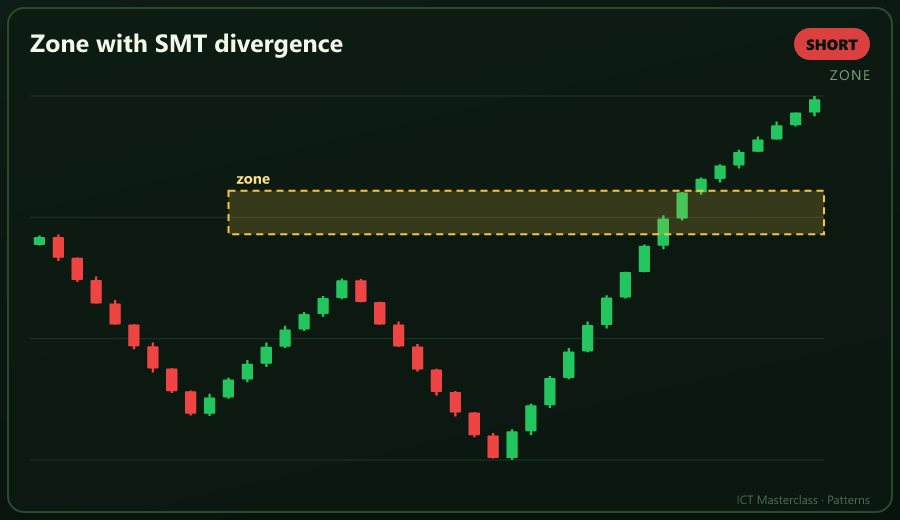
E18 Zone with SMT divergence
The zone gets stronger when the correlated pair refuses to confirm.
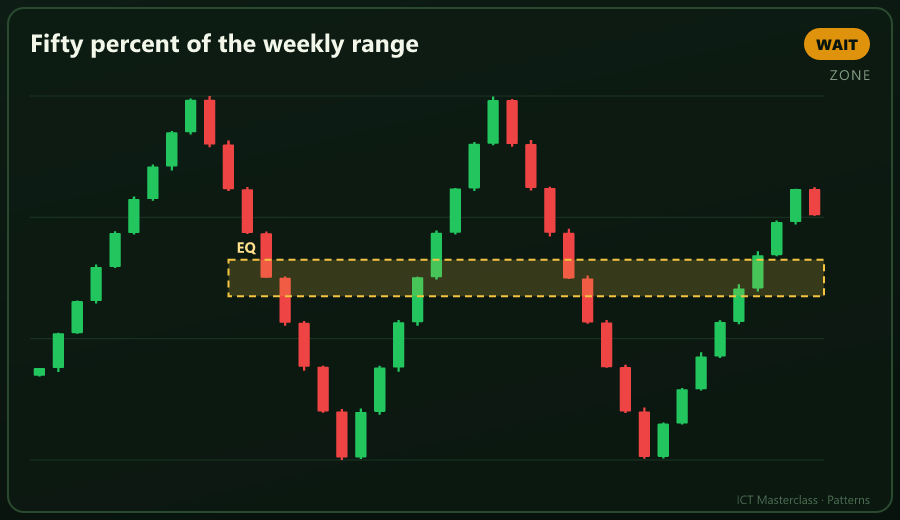
E19 Fifty percent of the weekly range
Do not enter at the weekly EQ; wait for an edge.
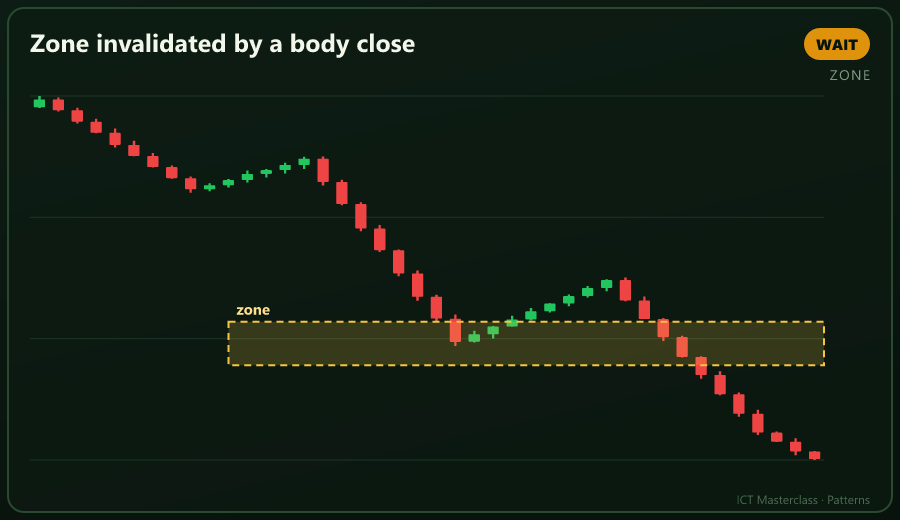
E20 Zone invalidated by a body close
A body close outside the zone kills it.
| Zone | Entry allowed? |
|---|---|
Discount with MSS | Yes, full risk |
Premium with MSS, wanting long | No |
Equilibrium | No, wait |
Session extreme, swept | Yes, the other side |
18.220 Patterns — Timeframe Basis
The same setup behaves differently on different timeframes. The rule: bias from the top, entry from the bottom, stop where the setup is wrong.
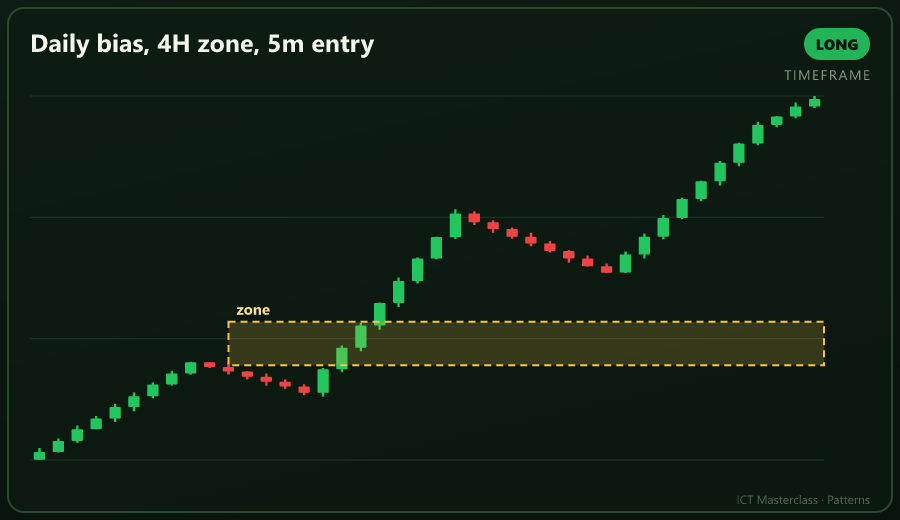
F1 Daily bias, 4H zone, 5m entry
Trade only when all three layers agree.
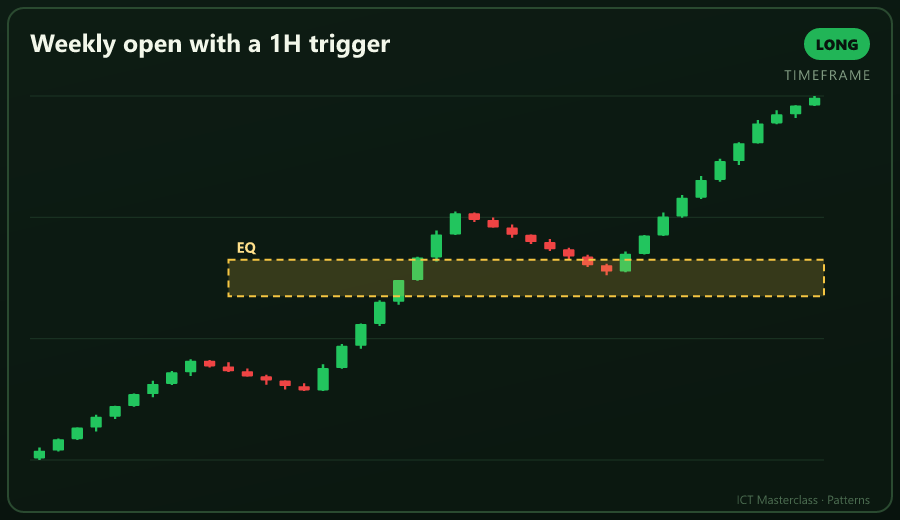
F2 Weekly open with a 1H trigger
The weekly line gives the side; the 1H gives the trigger.
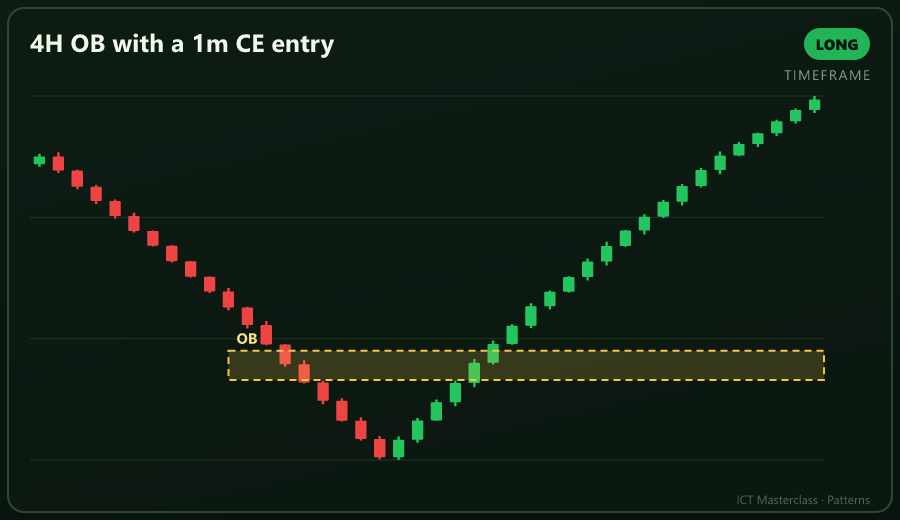
F3 4H OB with a 1m CE entry
A tiny trigger inside a big zone is the lowest risk.
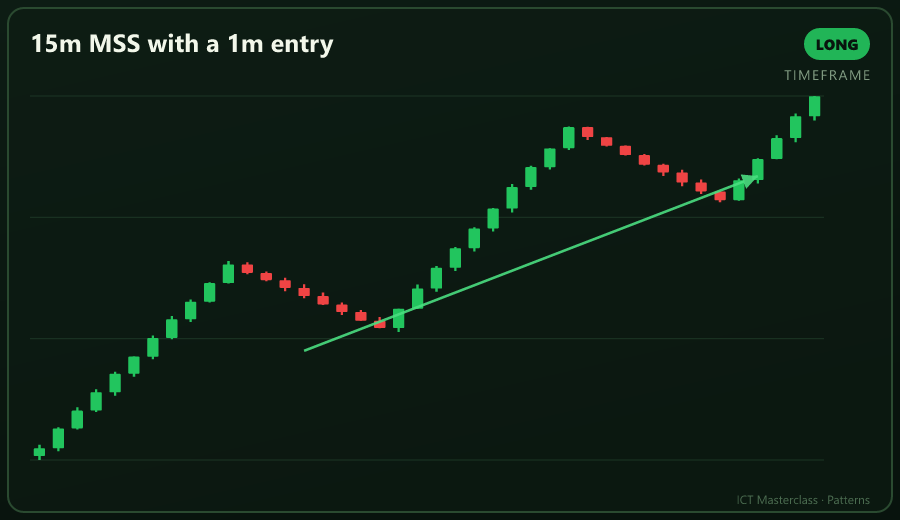
F4 15m MSS with a 1m entry
Confirm the MSS high, execute low.
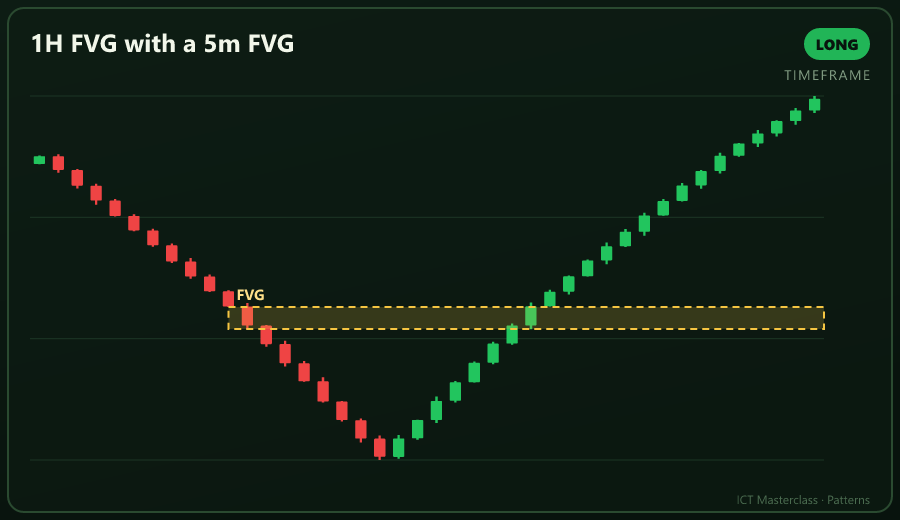
F5 1H FVG with a 5m FVG
Nested gaps put two timeframes on the same price.
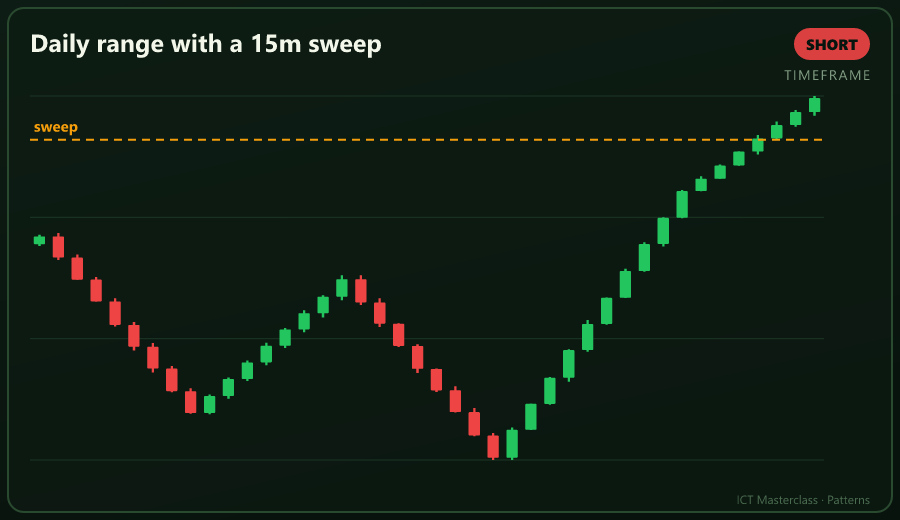
F6 Daily range with a 15m sweep
A 15m sweep at the daily edge is the reversal.
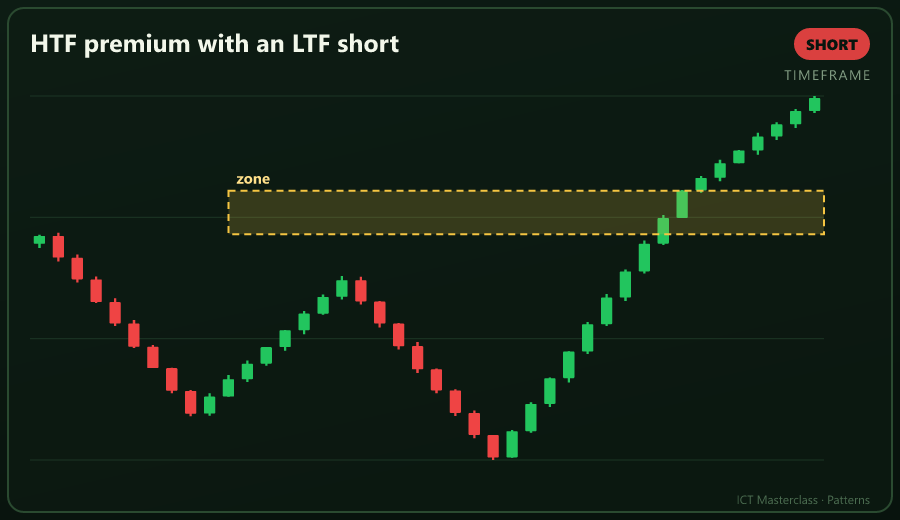
F7 HTF premium with an LTF short
The higher timeframe sets the limit; the lower one triggers.
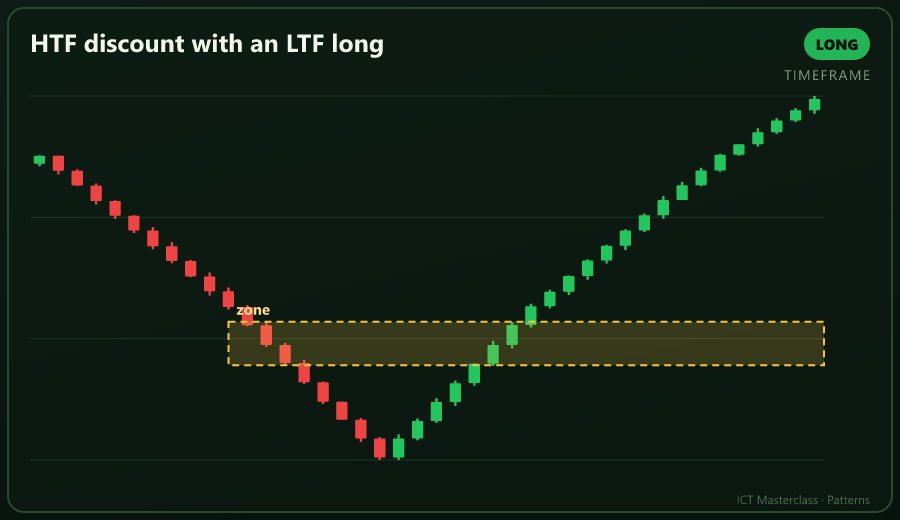
F8 HTF discount with an LTF long
Direction from the HTF, price from the LTF.
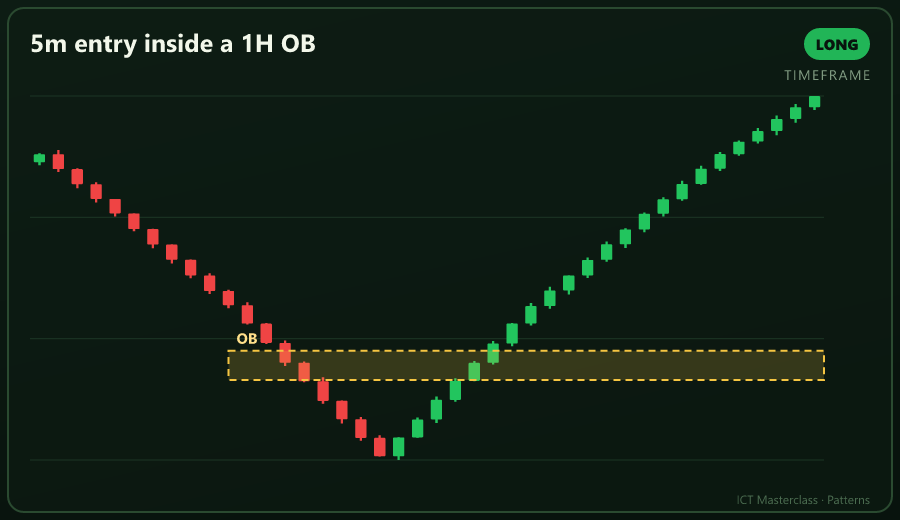
F9 5m entry inside a 1H OB
The inner timeframe shrinks your stop.
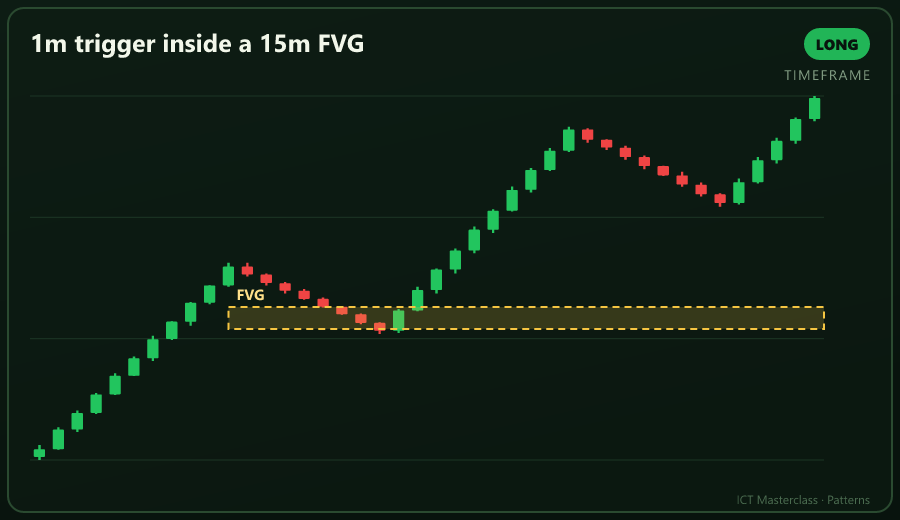
F10 1m trigger inside a 15m FVG
The best scalping combination.
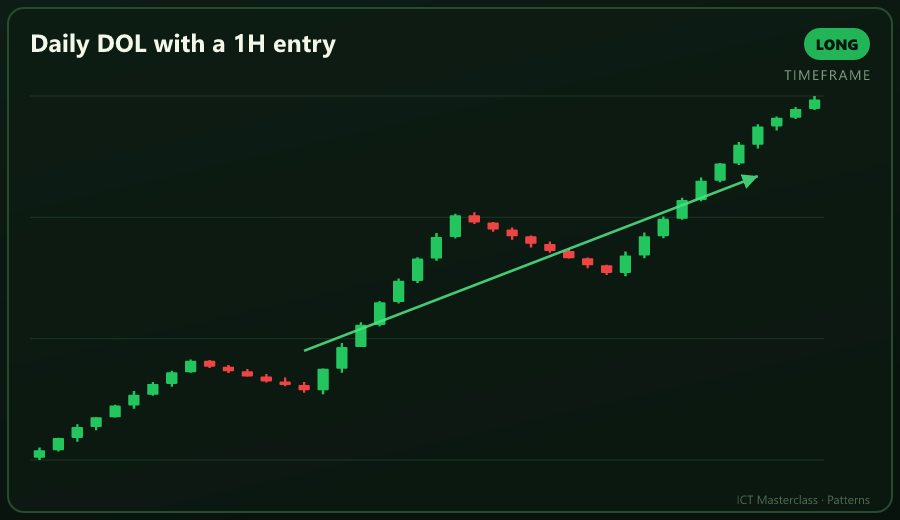
F11 Daily DOL with a 1H entry
The DOL comes from the daily; the entry from the 1H.
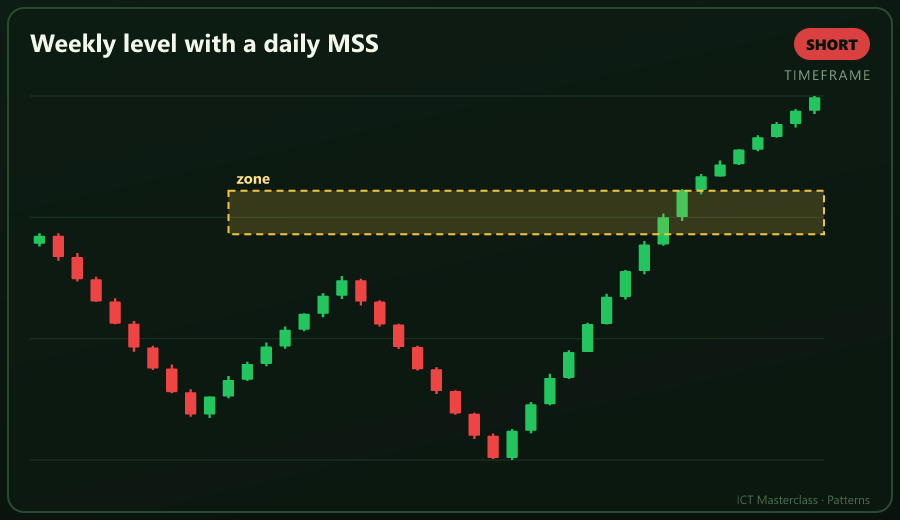
F12 Weekly level with a daily MSS
A daily MSS at a weekly level is a swing short.
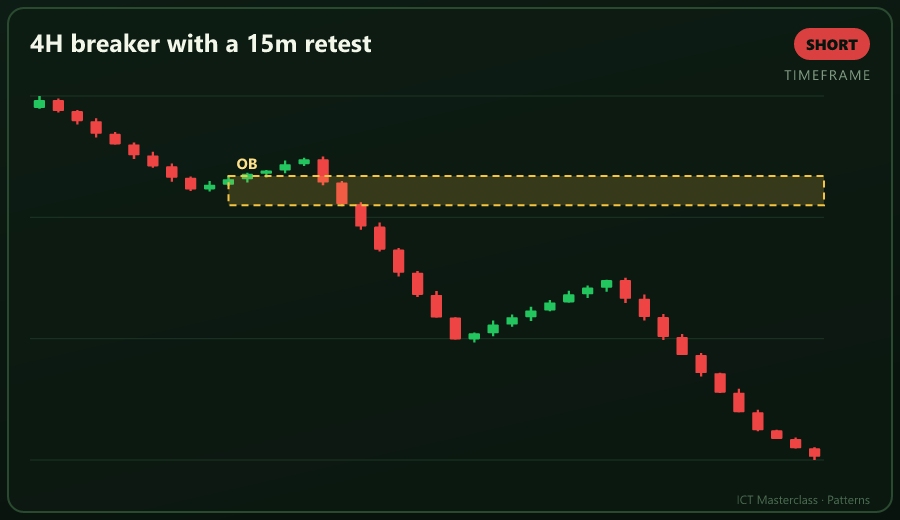
F13 4H breaker with a 15m retest
The breaker is big; the confirmation is small.
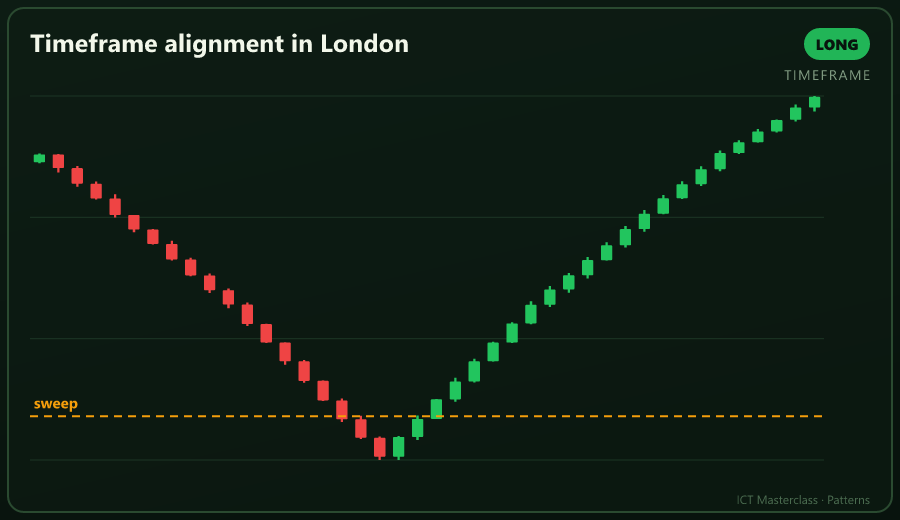
F14 Timeframe alignment in London
In London the 5m and 1m work together.
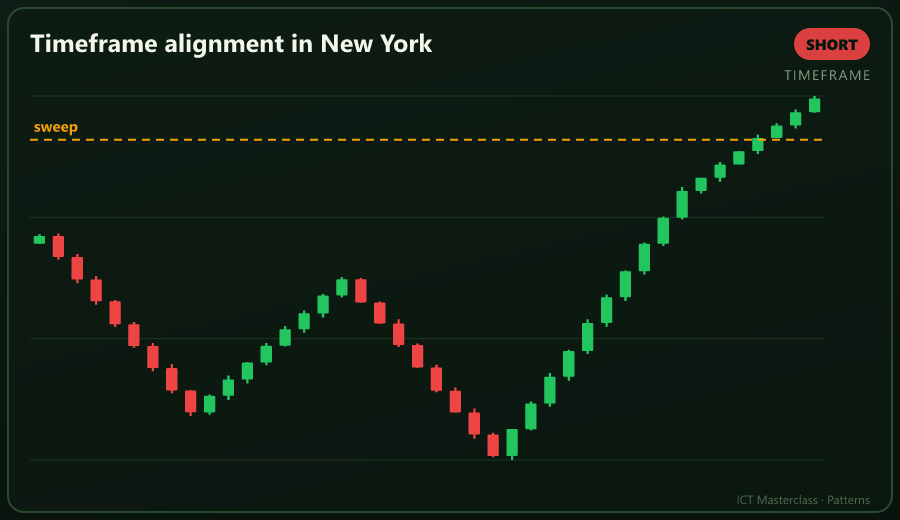
F15 Timeframe alignment in New York
NY AM has the biggest displacement.
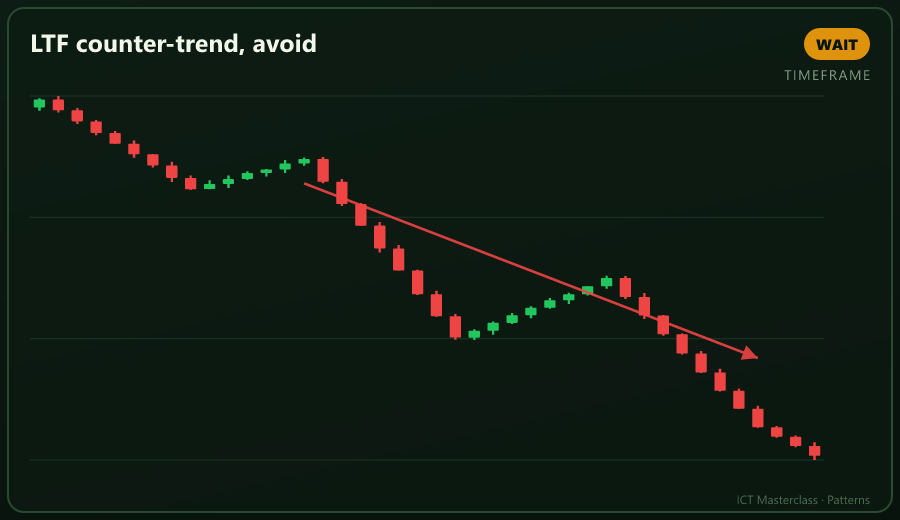
F16 LTF counter-trend, avoid
An LTF setup against the HTF bias is noise.
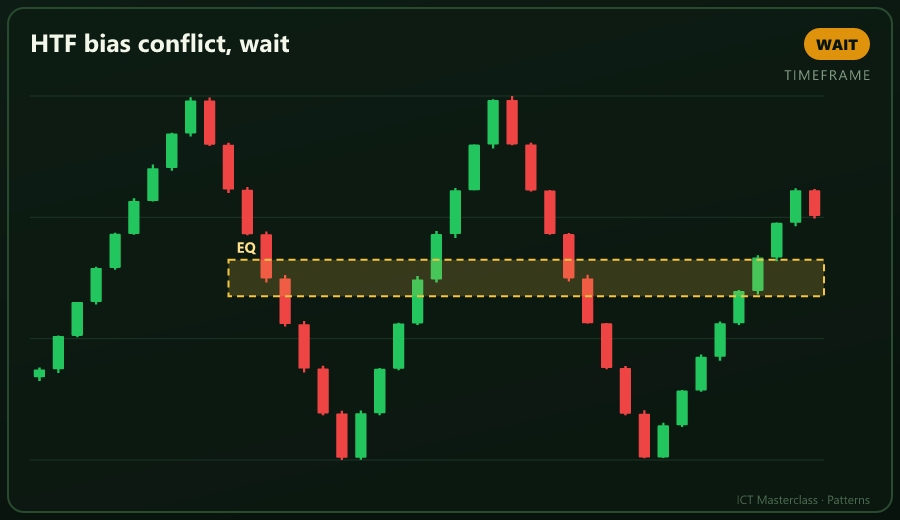
F17 HTF bias conflict, wait
Daily bullish and 4H bearish means no trade.
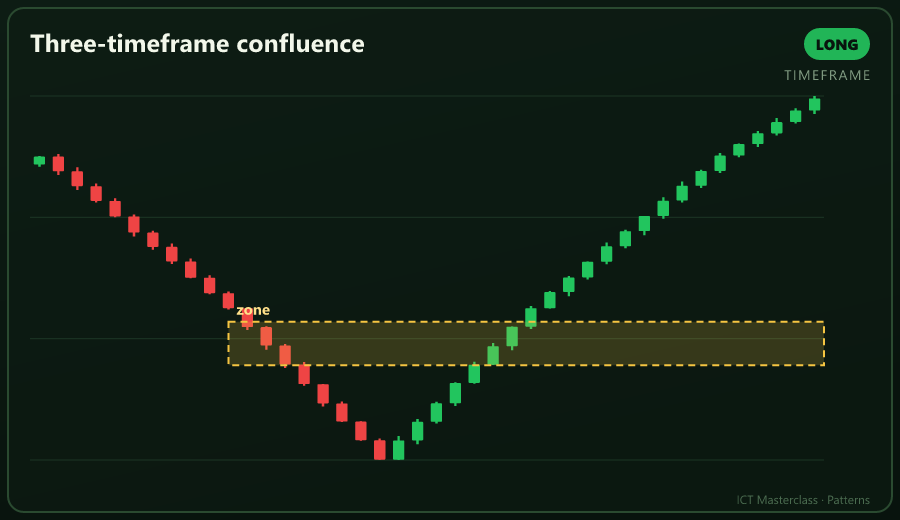
F18 Three-timeframe confluence
Three timeframes at one price is the highest probability.
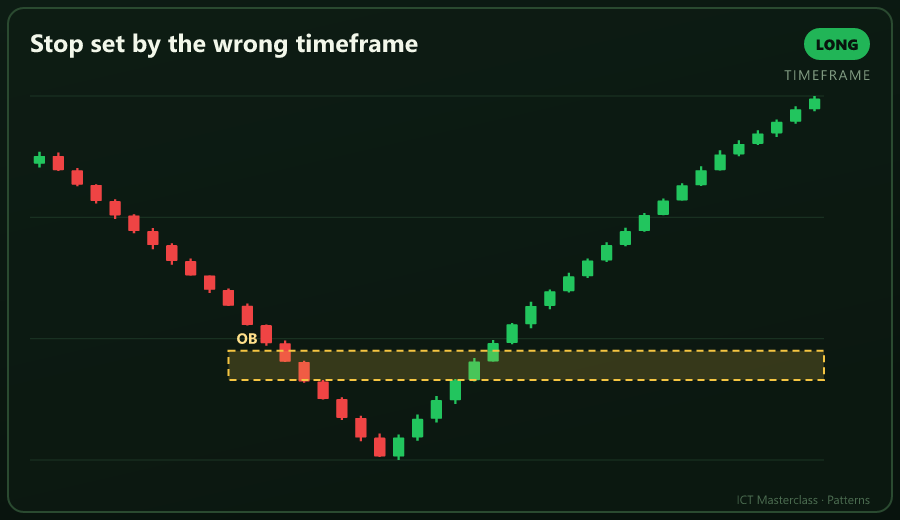
F19 Stop set by the wrong timeframe
A 1m stop inside a 4H OB gets hit too early.
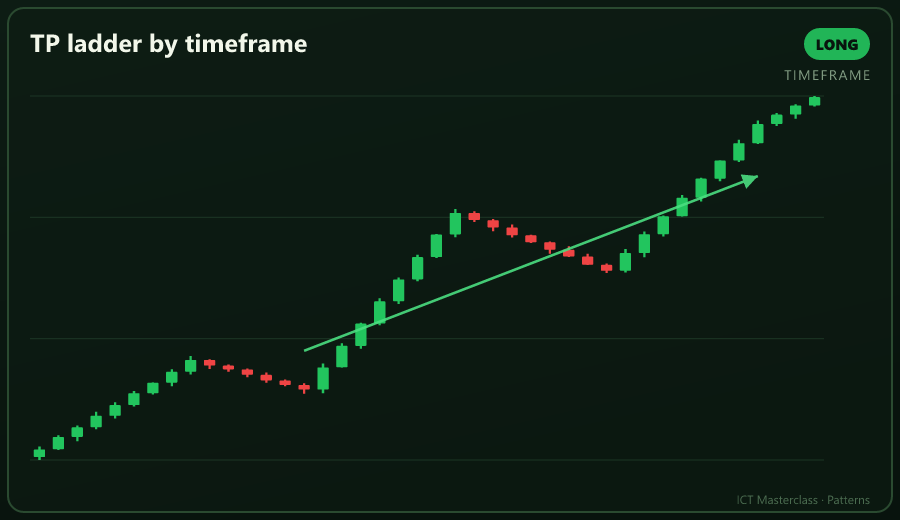
F20 TP ladder by timeframe
TP1 from the lower timeframe, TP2 from the HTF draw.
| Combination | Use |
|---|---|
Daily + 4H + 5m | The main swing and intraday stack |
1H + 15m + 5m | Scalps and day trades |
15m + 5m + 1m | Most precise, most noise |
One timeframe only | Never use it |
Educational material only · not financial advice.