CHAPTER 14
Liquidation Zones 1-20
A liquidation zone is the price where leveraged positions are force-closed. Knowing them tells you where never to park a stop - and where the best entries hide.
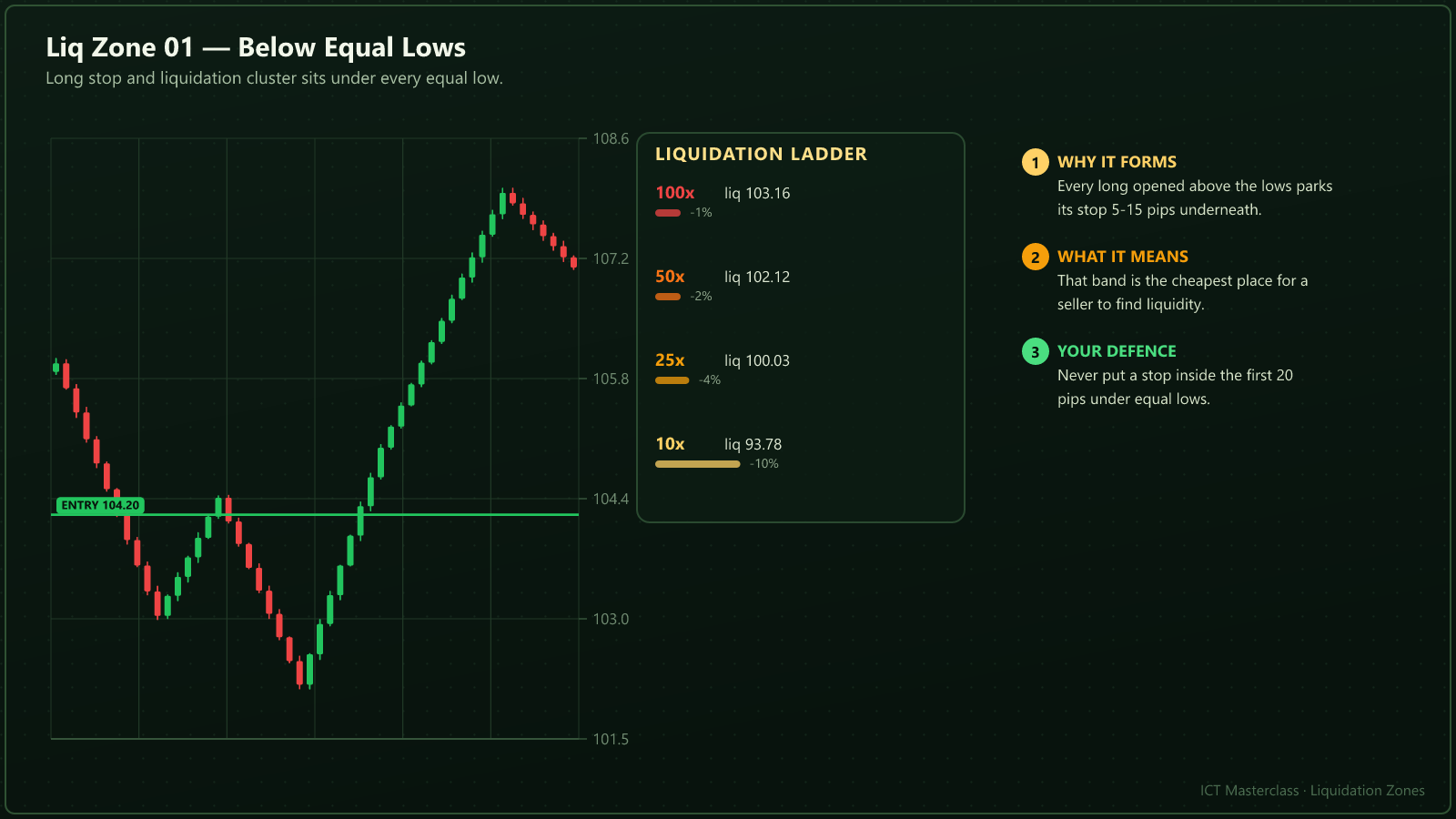
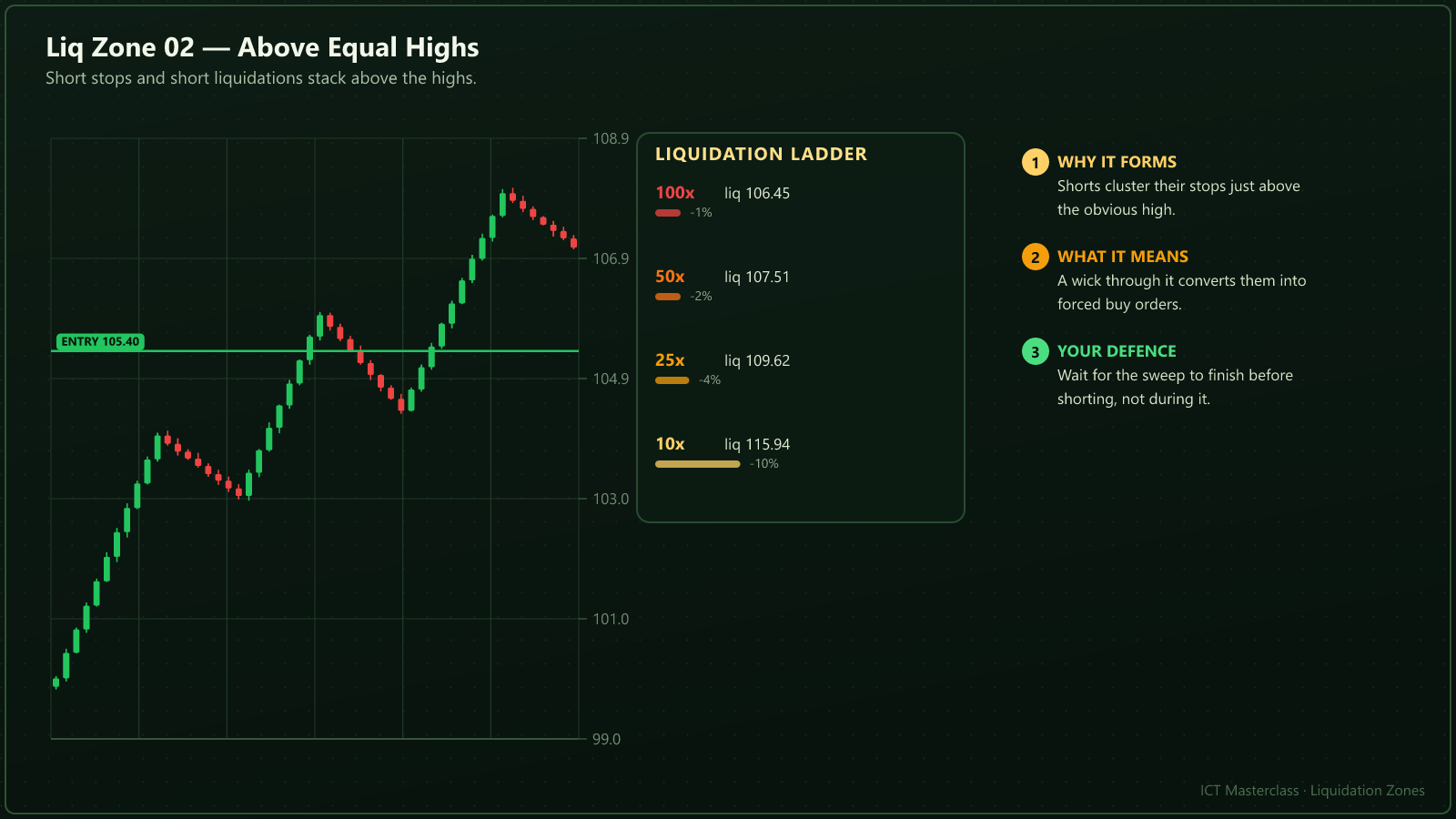
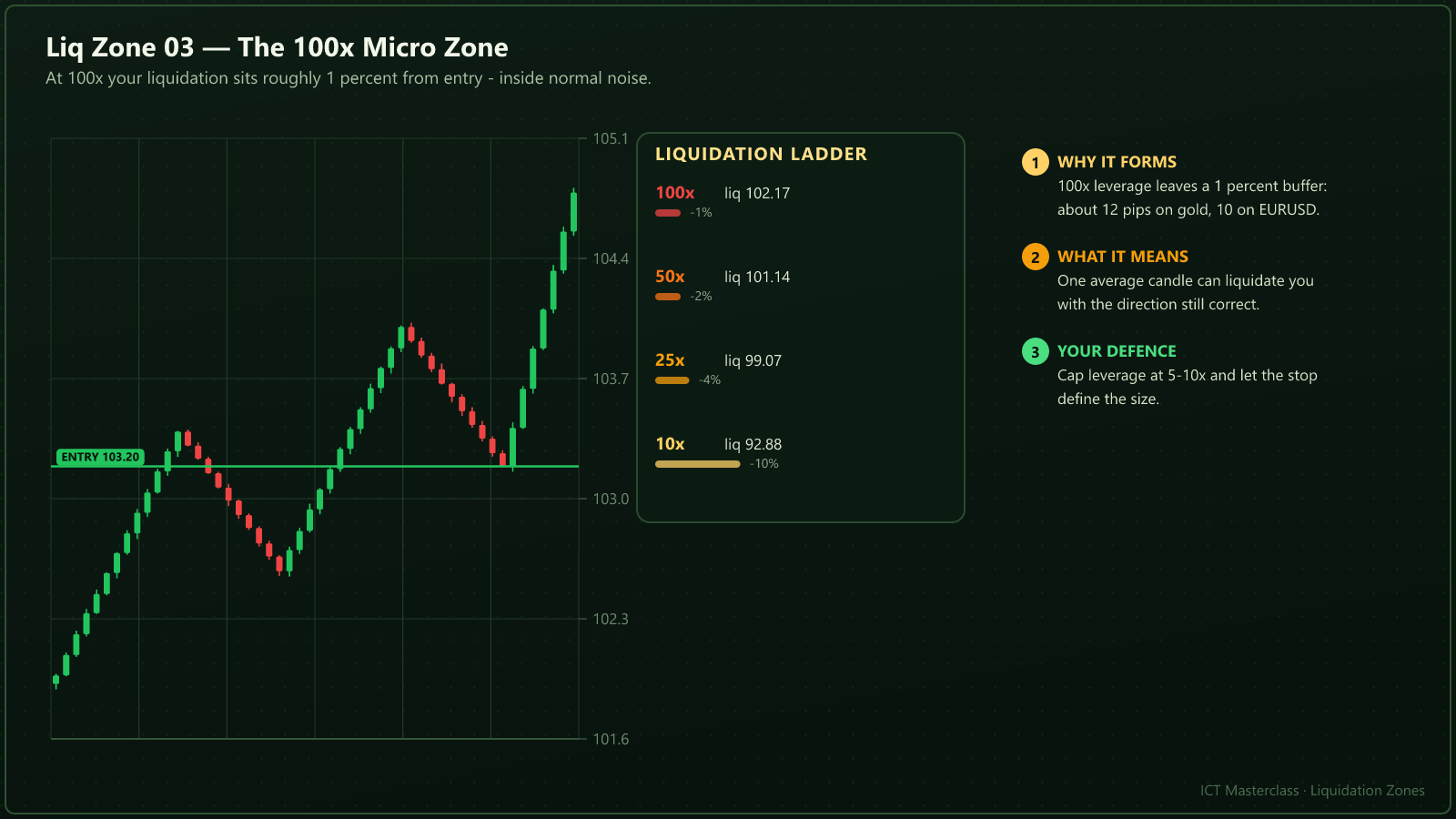
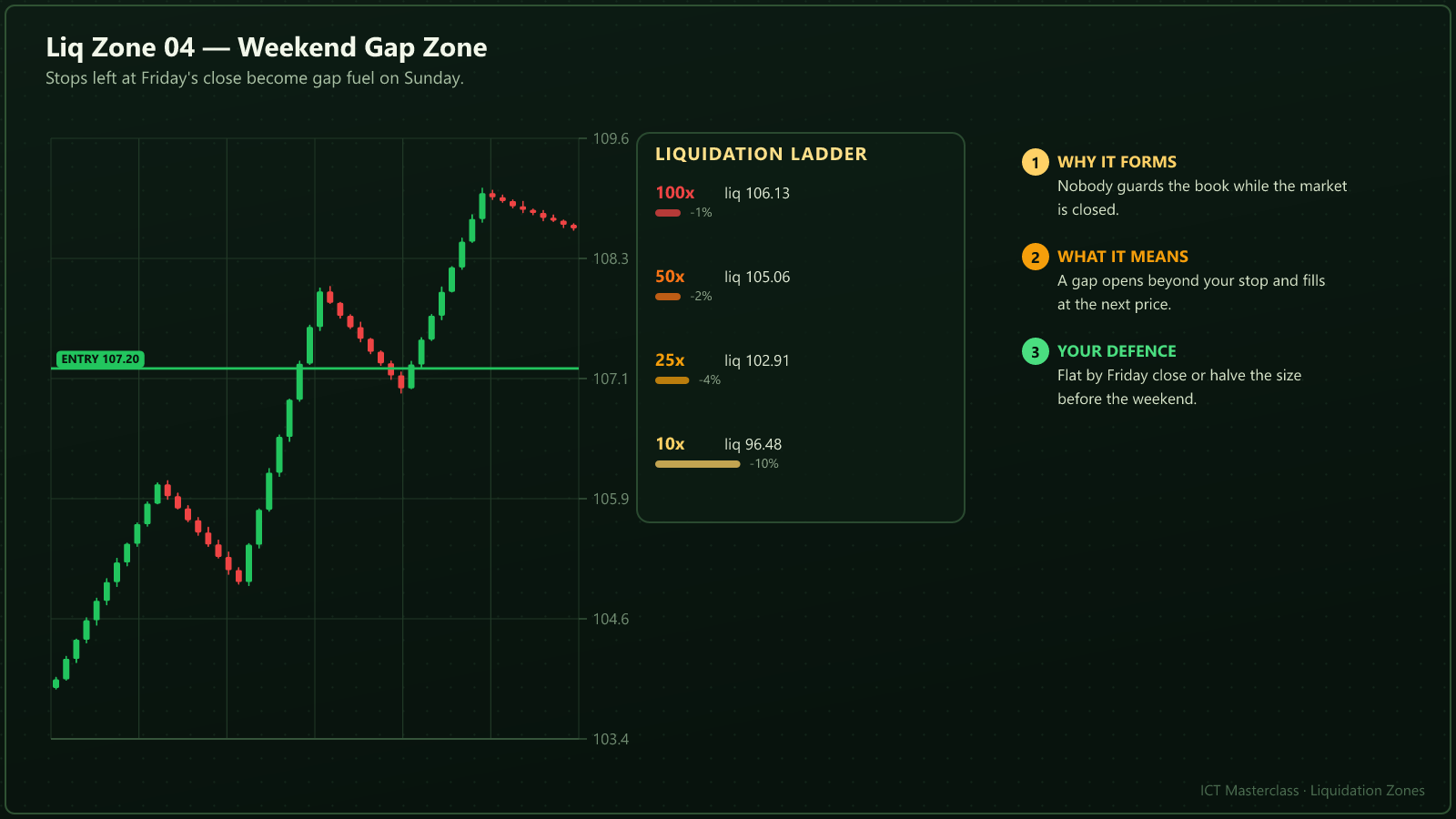
The quick maths: 10x = 10 percent, 25x = 4 percent, 50x = 2 percent, 100x = 1 percent. That distance from entry is your liquidation price, and every chart shows all four lines.
Below Equal Lows
Every long parks its stop five to fifteen pips under the equal low, which makes that band the cheapest liquidity for a seller.
| Topic | Rule |
|---|---|
How it forms | Long stops and liquidations stack in the same band. |
What it means | Price entering the band creates forced buy orders. |
Your defence | Never place a stop within twenty pips under equal lows. |
Above Equal Highs
Shorts put stops just above the obvious high; one wick converts them into forced buying.
| Topic | Rule |
|---|---|
How it forms | Short stops stack above the high. |
What it means | Shorting before the sweep ends makes you the fuel. |
Your defence | Short only after the sweep and a 5m MSS. |
The 100x Micro Zone
At 100x, liquidation sits roughly one percent from entry: ordinary noise ends you.
| Topic | Rule |
|---|---|
How it forms | Tiny margin means a one percent move triggers a call. |
What it means | You get liquidated even when the direction is right. |
Your defence | Cap leverage at 5-10x and let the stop set the size. |
Weekend Gap Zone
Stops left at Friday close are filled by the Sunday gap, which jumps straight over your stop.
| Topic | Rule |
|---|---|
How it forms | Nobody guards the book while the market is closed. |
What it means | The stop is skipped and filled at the next price. |
Your defence | Be flat on Friday, or halve the size. |
News Candle Sweep Zone
Spreads widen and both stop clusters fall inside the spike range: right bias, stopped out anyway.
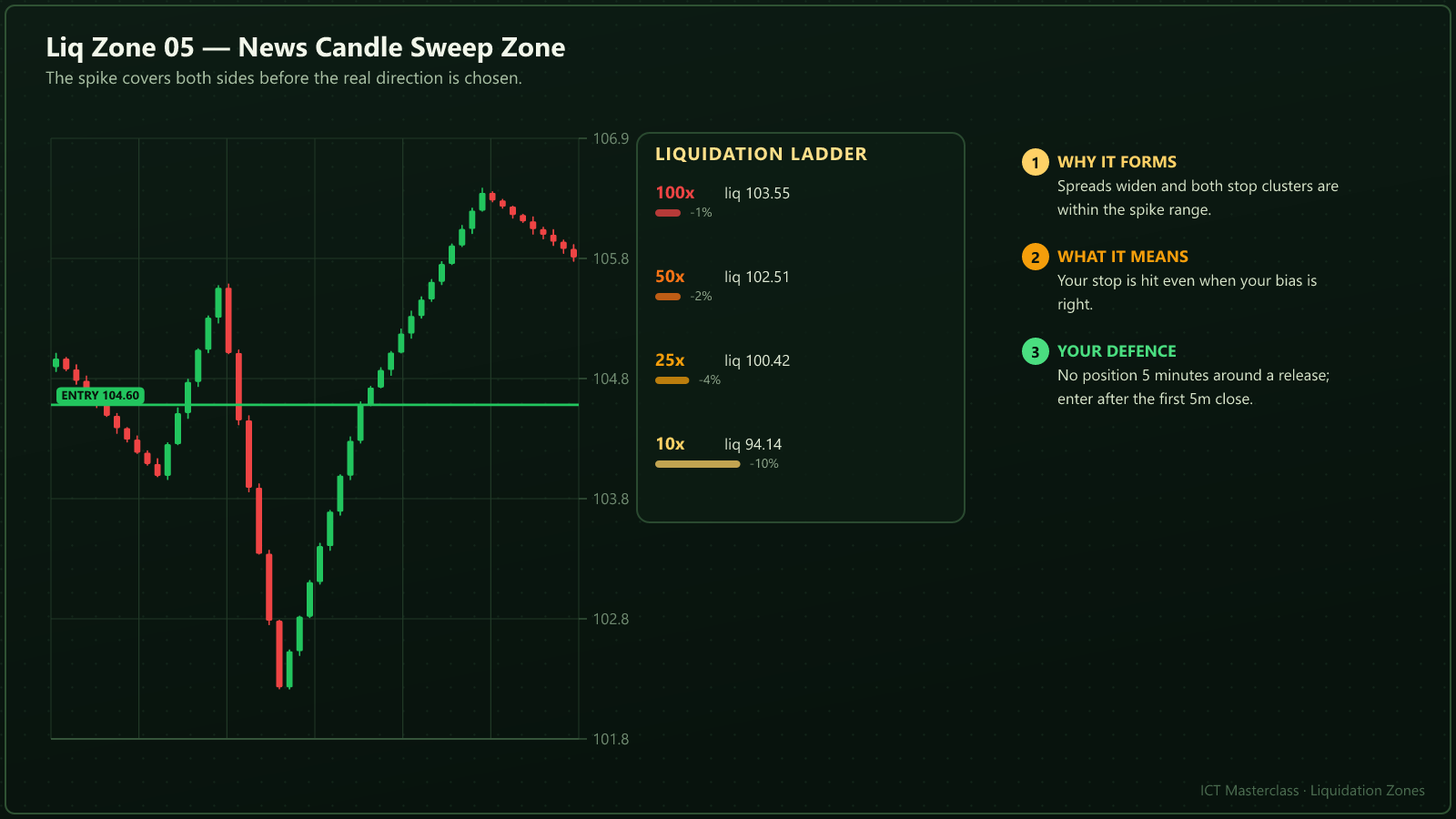
| Topic | Rule |
|---|---|
How it forms | The spike takes liquidity on both sides. |
What it means | The first candle is clearing, not information. |
Your defence | No position five minutes either side. |
Range Extreme Band
Range traders put stops just beyond the boundary, so the ten percent band outside holds the most stops.
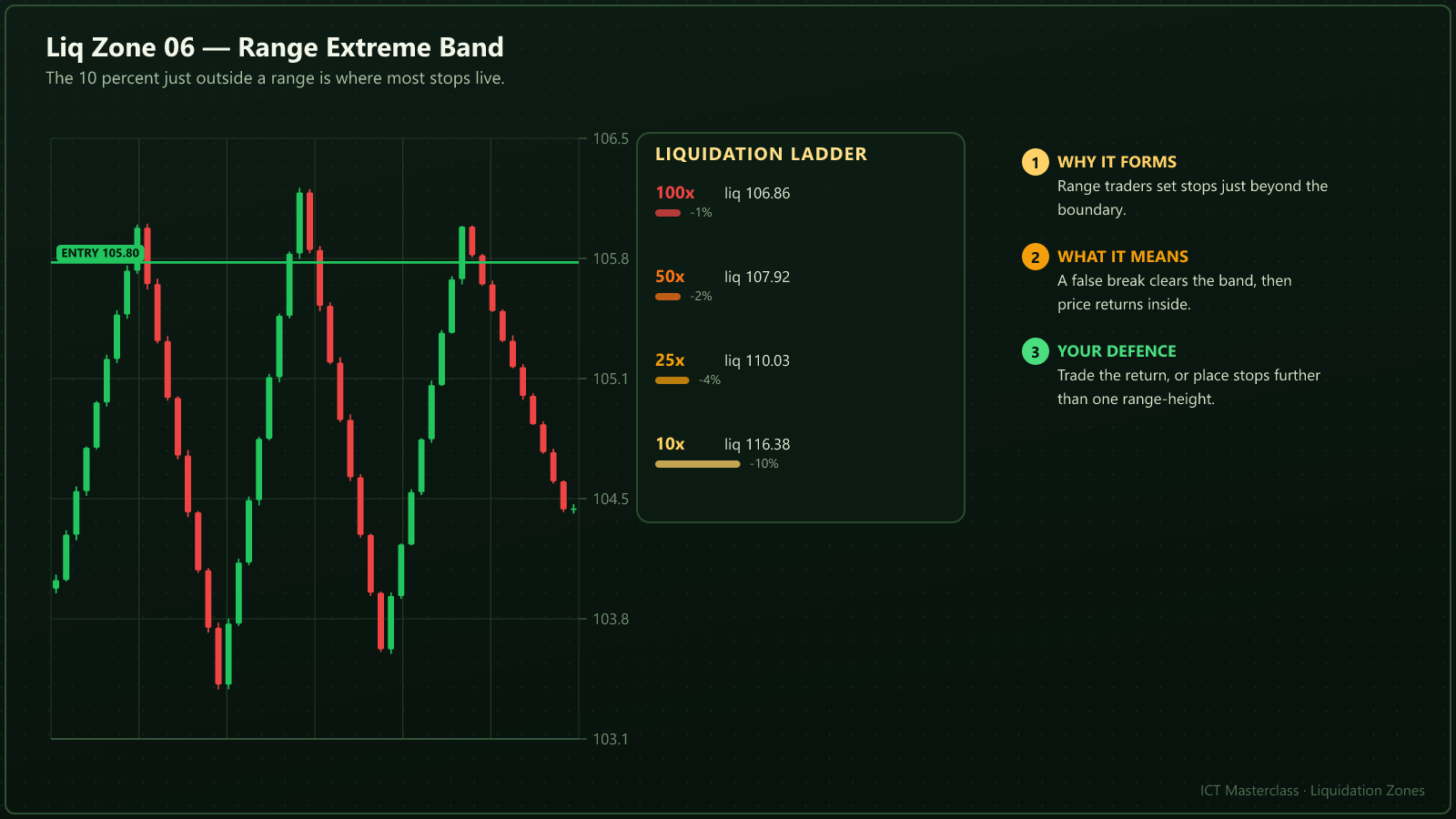
| Topic | Rule |
|---|---|
How it forms | Stops stack just outside the boundary. |
What it means | A false break clears the band then returns inside. |
Your defence | Keep the stop more than one range-height away. |
Round Number Magnet
Orders cluster on round numbers and stops just beyond them, so price often spikes through and returns.
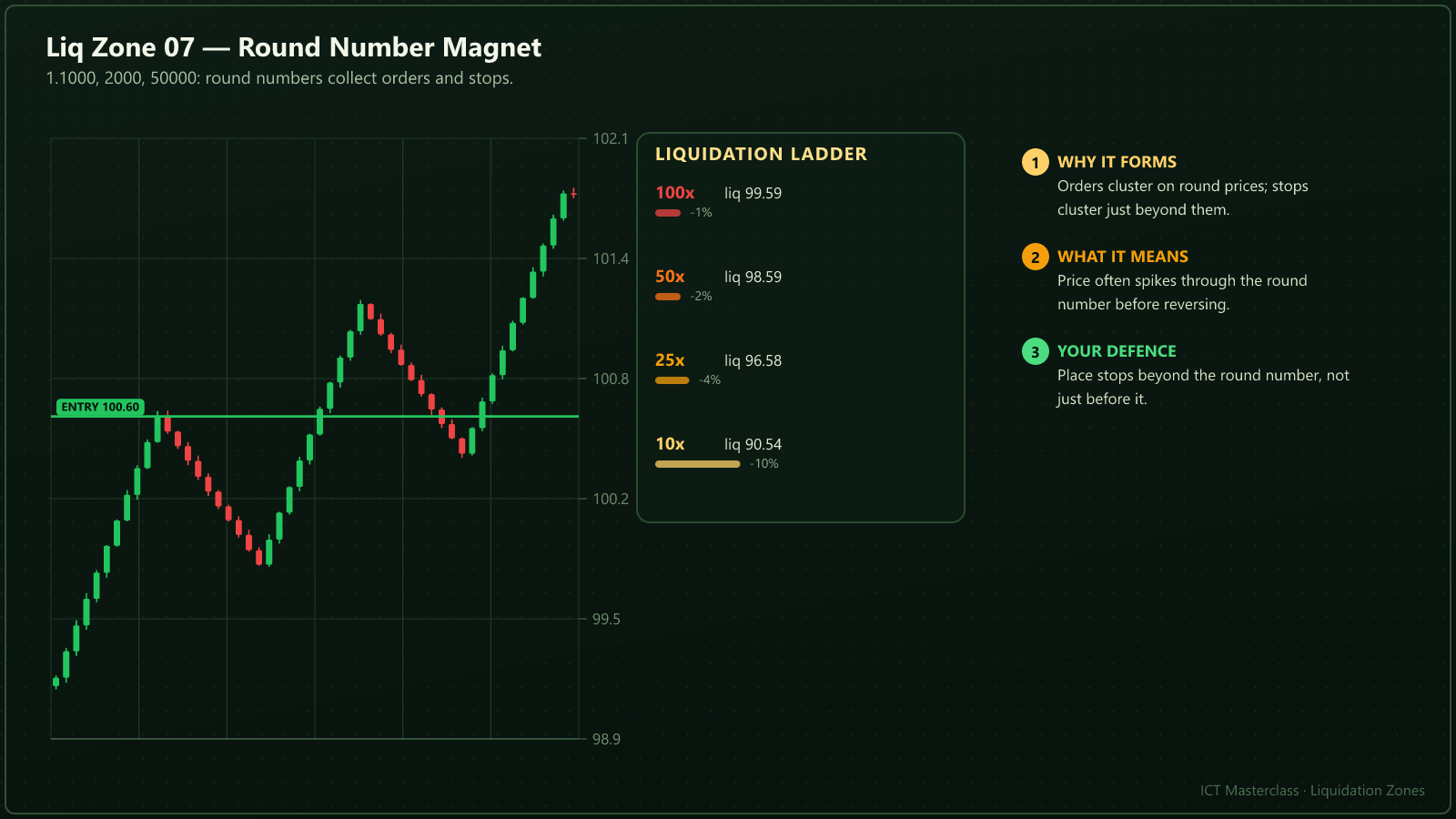
| Topic | Rule |
|---|---|
How it forms | 1.1000, 2000, 50000 - everyone uses them. |
What it means | Breaking the number takes stops, not trend. |
Your defence | Put the stop beyond the number, not before it. |
Session Extreme Band
The London and New York extremes hold the densest stop clusters of the day, and the next session raids them.
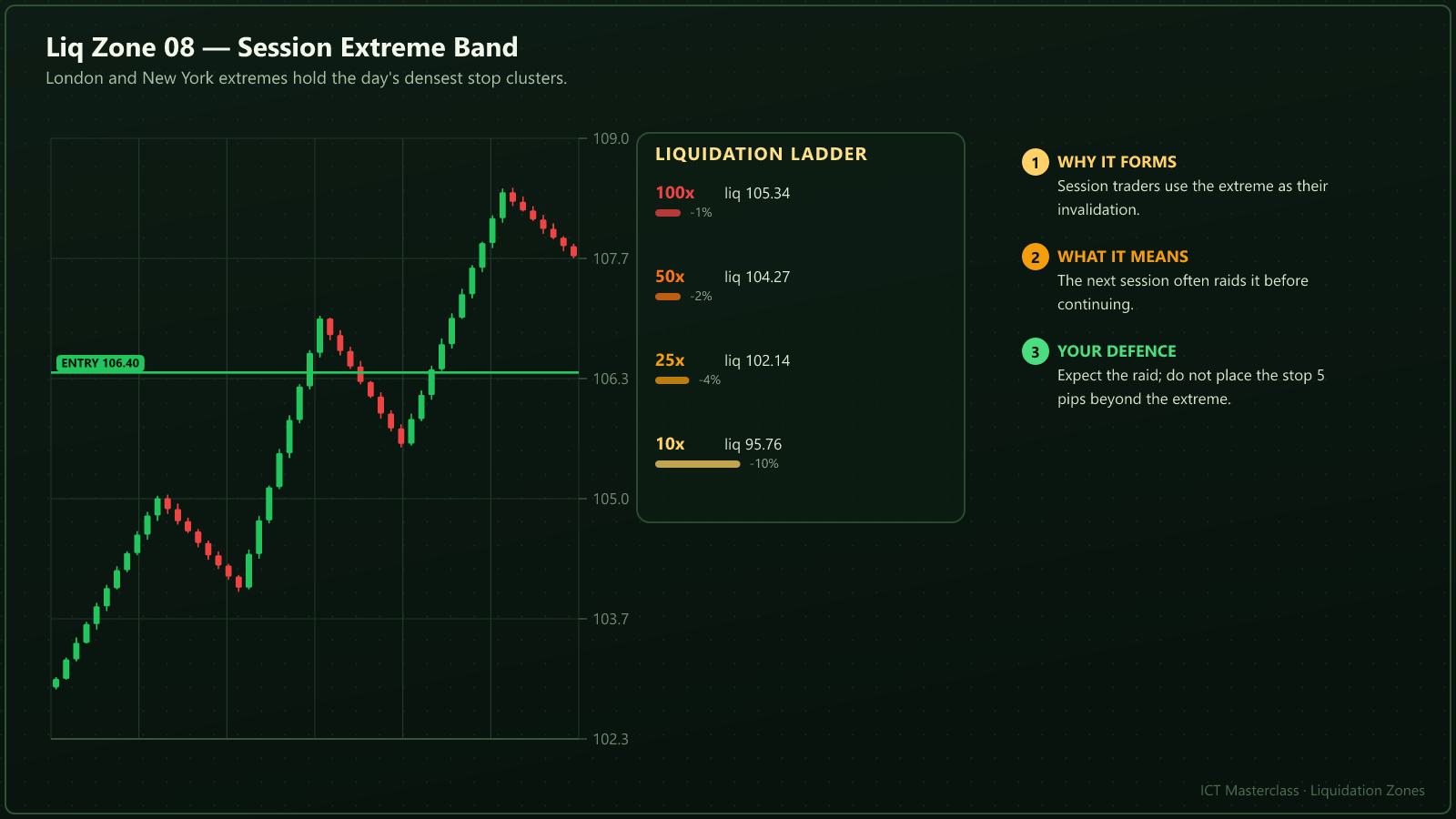
| Topic | Rule |
|---|---|
How it forms | Session traders use the extreme as invalidation. |
What it means | Expect the raid instead of trying to dodge it. |
Your defence | Never five pips beyond the extreme. |
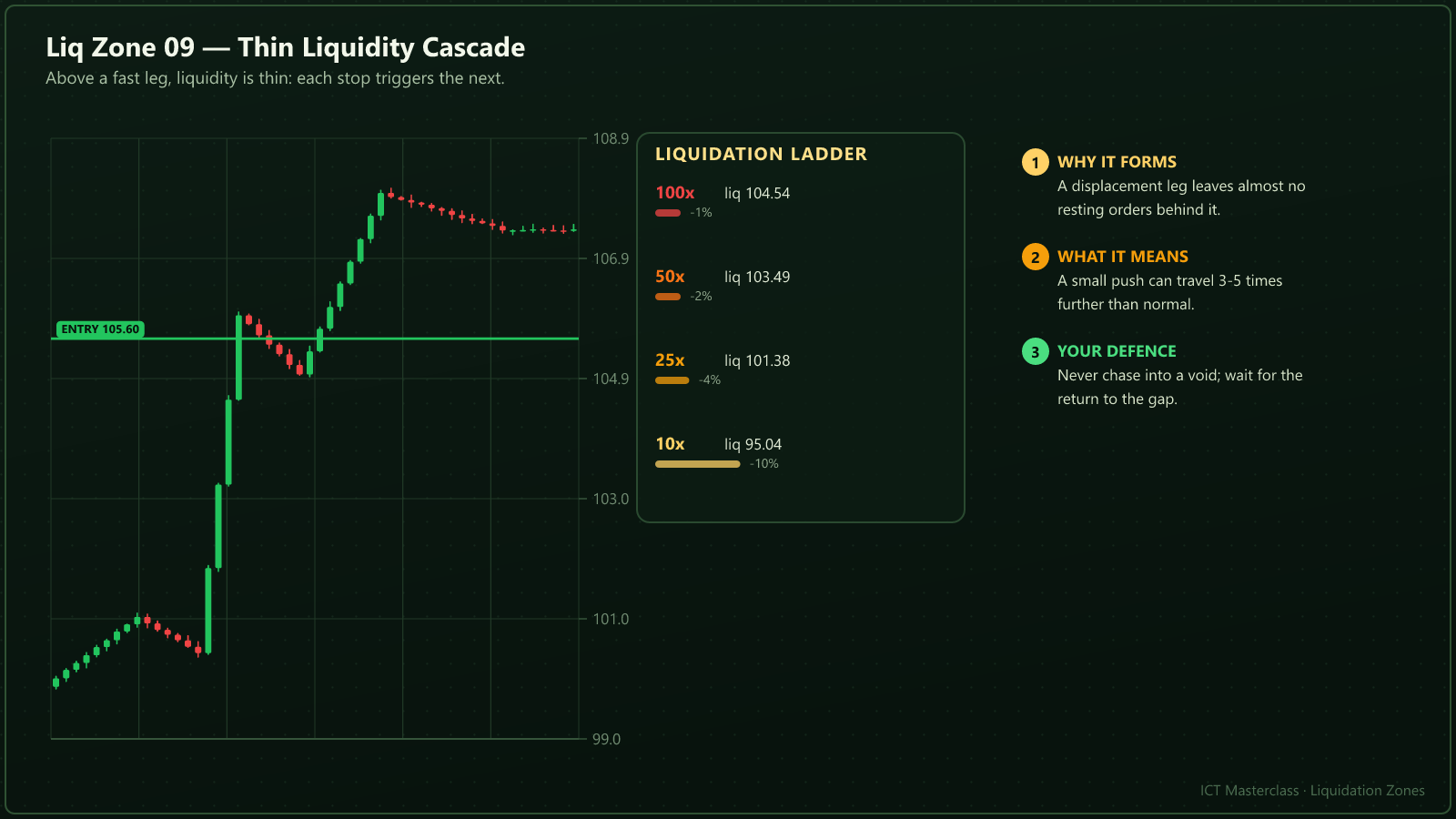
Thin Liquidity Cascade
Above a fast leg there are almost no resting orders, so each stop triggers the next and the move travels three to five times further.
| Topic | Rule |
|---|---|
How it forms | Displacement leaves an empty book behind it. |
What it means | A small push creates a large move. |
Your defence | Do not chase the void; wait for the return to the gap. |
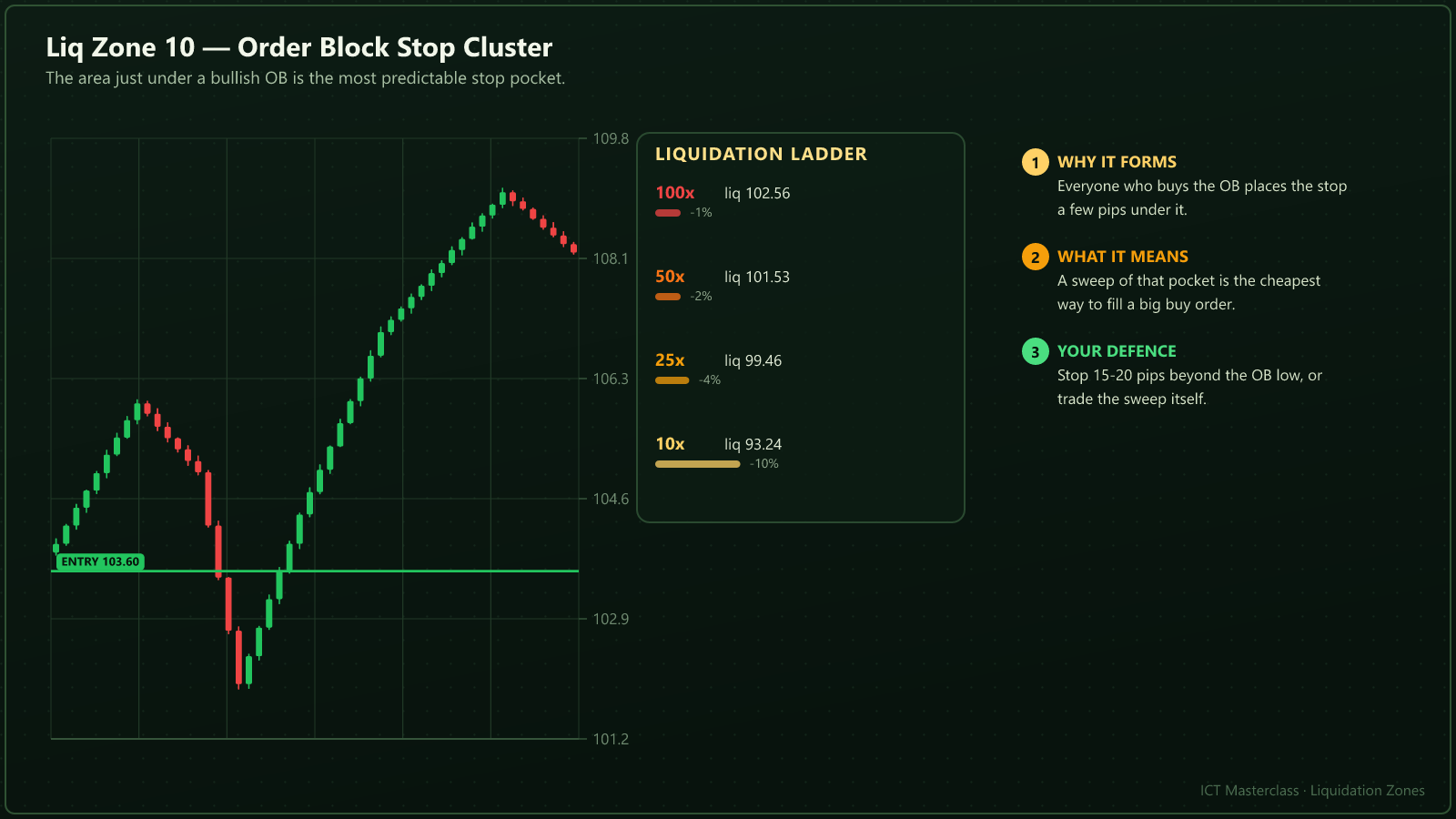
Order Block Stop Cluster
The pocket under a bullish OB is the most predictable stop cluster and the cheapest place to fill a large buy order.
| Topic | Rule |
|---|---|
How it forms | Everyone buying the OB stops out a few pips below. |
What it means | A sweep under the OB is often the cleanest entry. |
Your defence | Stop fifteen to twenty pips below the OB low. |
Educational material only · not financial advice.