CHAPTER 3
Liquidity: The Fuel of the Market
If an institution wants to buy 500 million, it needs sellers. Where are they? Right where retail placed its stops. This chapter teaches you to see those places.
3.1What Liquidity Is
Liquidity is the pile of opposite orders. To buy, someone must sell. In FX a large order is never filled at one click - price has to be moved to where orders cluster. Those clusters are what we hunt for.
- BSL - buy stops resting above highs: the stop losses of short sellers.
- SSL - sell stops resting below lows: the stop losses of long holders.
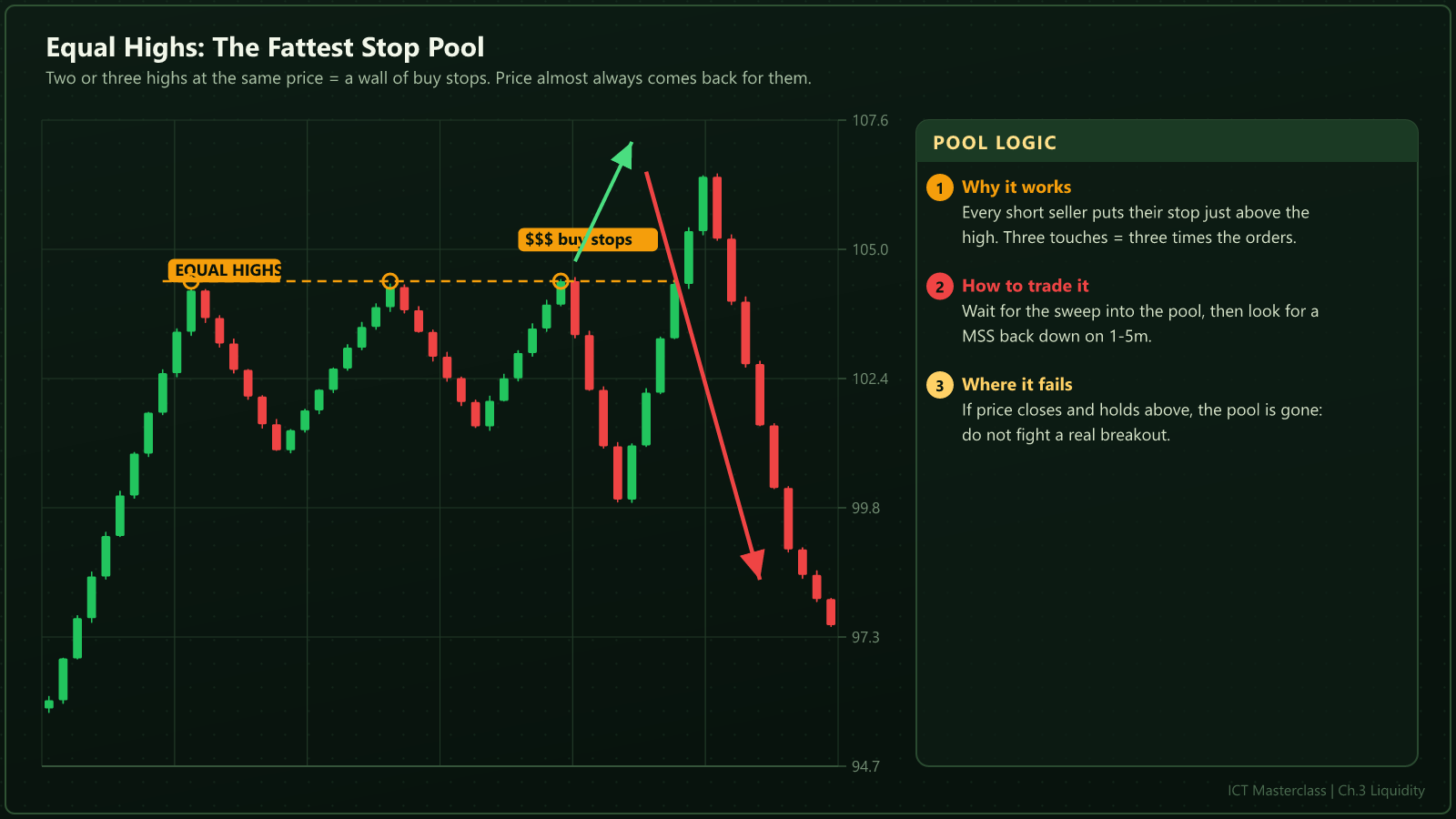
- Equal highs/lows - the fattest pools, because everyone parks stops at the same place.
- Trendline liquidity - stops stacked along a diagonal trendline.
- Round numbers and session highs/lows - psychological pools.
3.2Sweep Versus Breakout
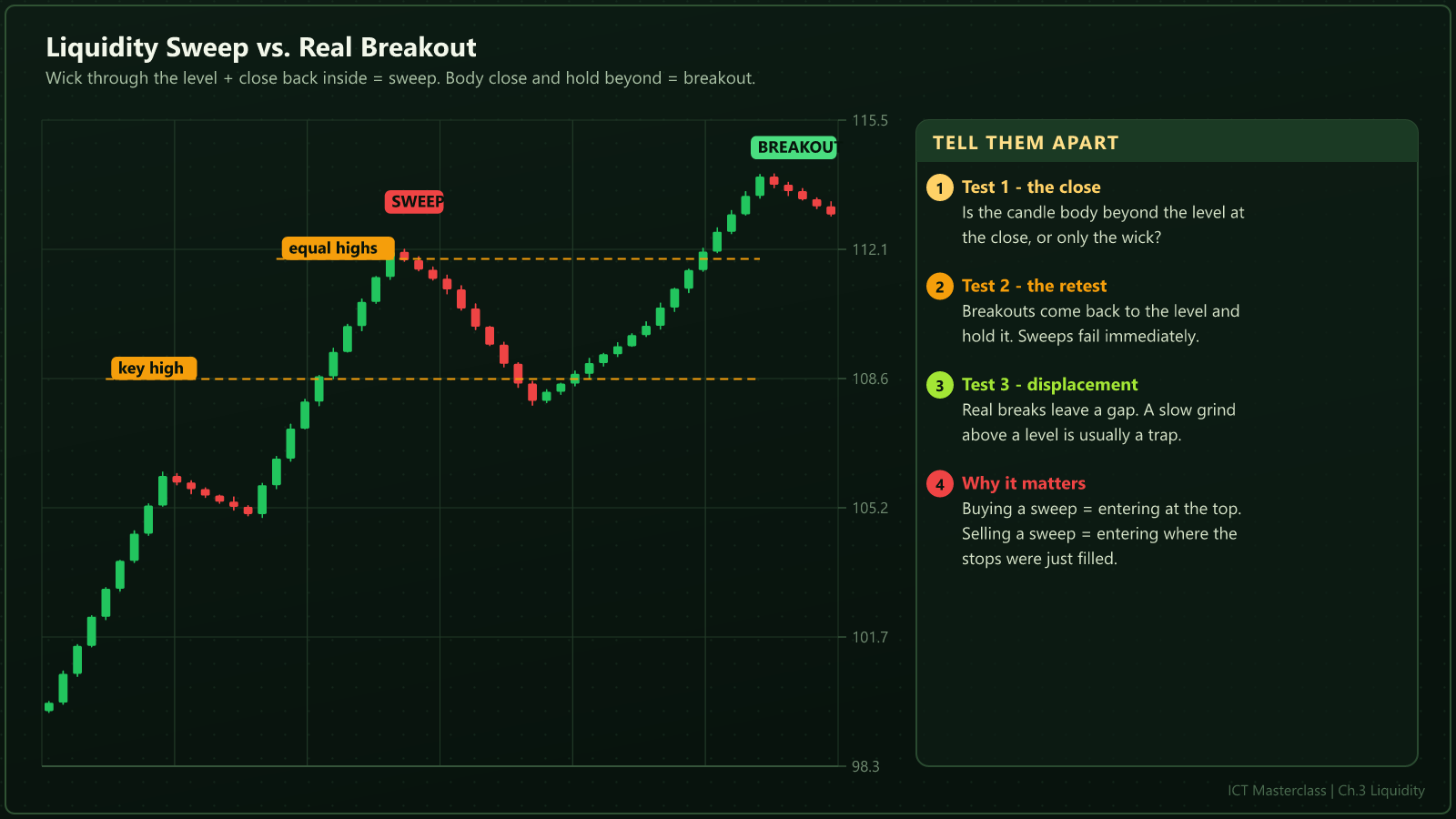
This is the most valuable skill in the book. A level breaks. One question decides everything: did the candle close beyond it, or did it come back?
| Signal | Sweep (reversal) | Breakout (continuation) |
|---|---|---|
Close | Body closes back inside | Body closes beyond and holds |
Displacement | Large opposite body after the sweep | Consistent bodies in the same direction |
Retest | Fails on the retest | Holds the level on the retest |
Trade | Trade the opposite side of the level | Trade with the break, on the retest |
3.3DOL - Where Price Is Drawn
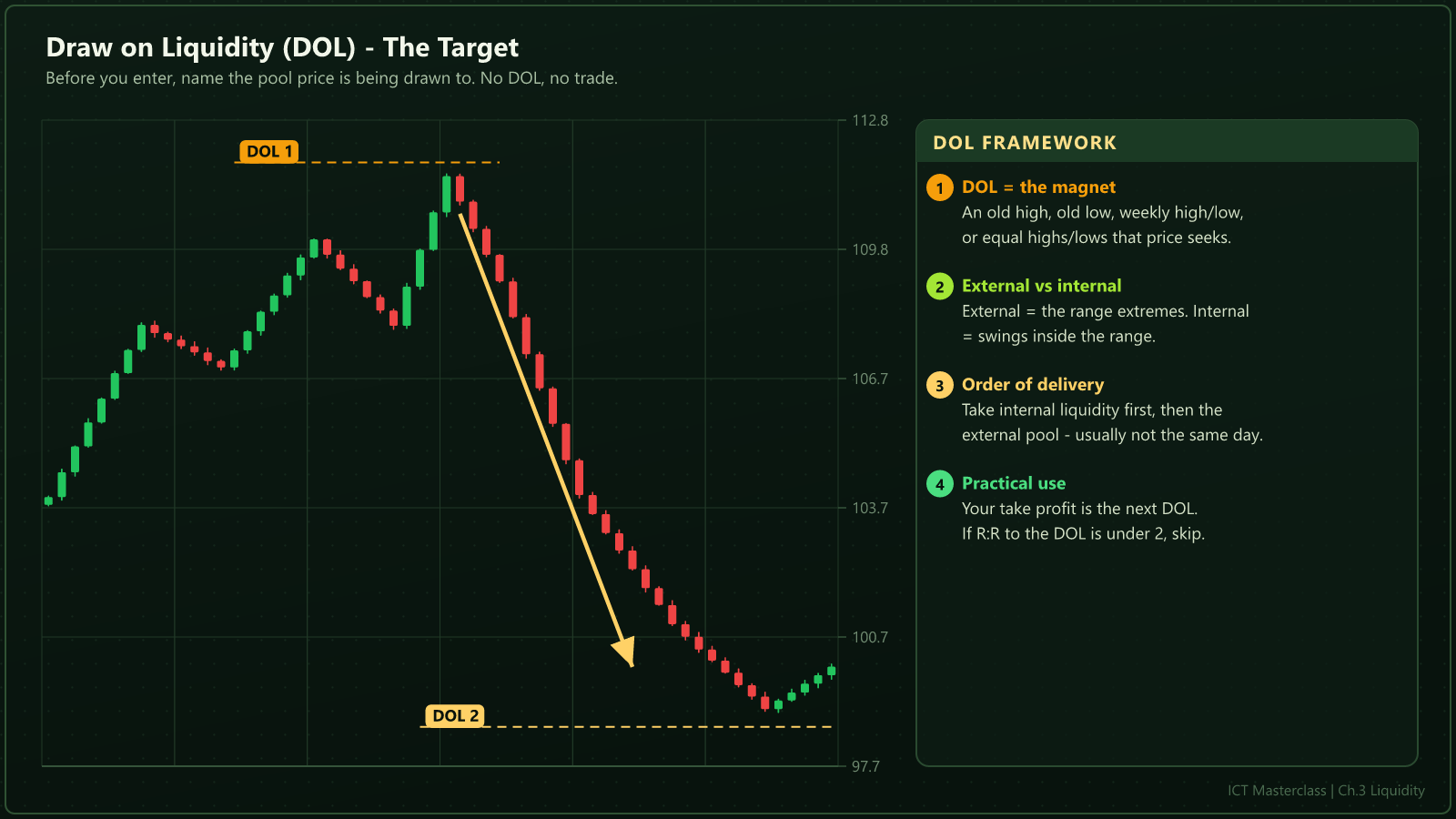
Before every trade you must be able to say one sentence: price is being delivered from pool X to pool Y. Y is your DOL and Y is your take profit.
| Type of draw | Example |
|---|---|
External | Weekly high/low, previous day high/low, range extremes |
Internal | Equal highs/lows, 15m swings, the far edge of an FVG |
Time-based | Monthly open, weekly open, midnight open |
3.4Liquidity Void
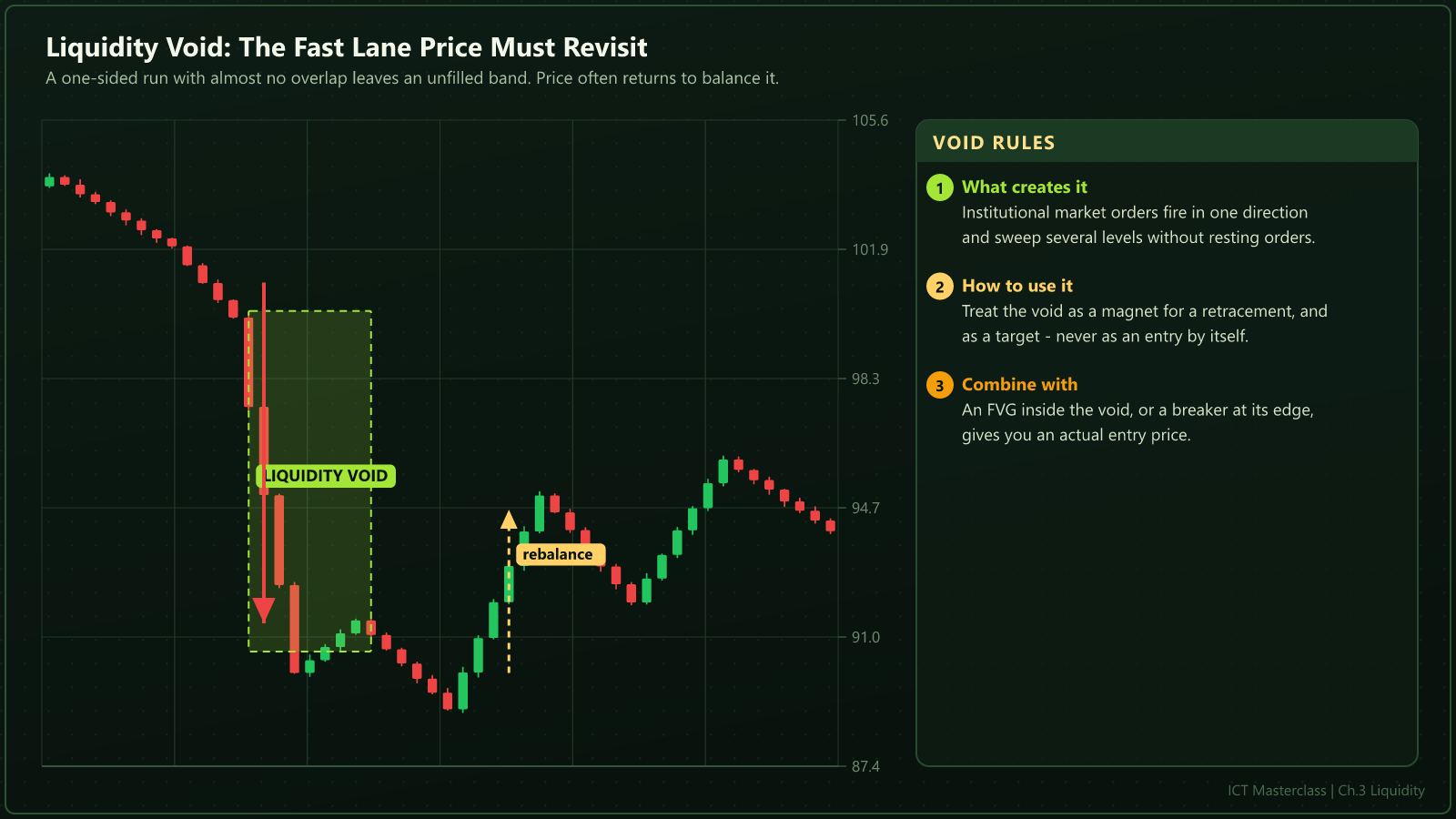
When price crosses an area extremely fast, almost no trading happened there - that is a liquidity void. It often gets refilled later because the market wants to balance that area.
3.5Which Pool Gets Taken First?
Usually internal liquidity goes first, then external. Micro swing stops are taken before the big high or low. That sequence is exactly why you split TP1 and TP2.
- Mark the highest and lowest untouched pool on the daily.
- On the 1H decide which is near and which is far.
- The near one is TP1, the far one is TP2.
- If price sits mid-range, wait until it reaches an edge.
3.6What A Stop Hunt Looks Like
Three signatures of a stop hunt: a long wick beyond the level, immediate displacement the other way, and price never returning to that level. When all three appear, liquidity was just collected.
"The level everyone can see is not your entry - it is your target."
3.7Drill: Twenty Minutes A Day
- Open any pair on the daily and mark every equal high and low of the last 30 days.
- Note which were taken and which were not.
- For the taken ones, draw an arrow to where price went next.
- Fifty charts of this drill and your eyes are trained.
Educational material only · not financial advice.