CHAPTER 13
Liquidation Traps 11-20
The first ten were liquidity traps. The last ten are behavioural and management traps: these come from your own head, not from the market.
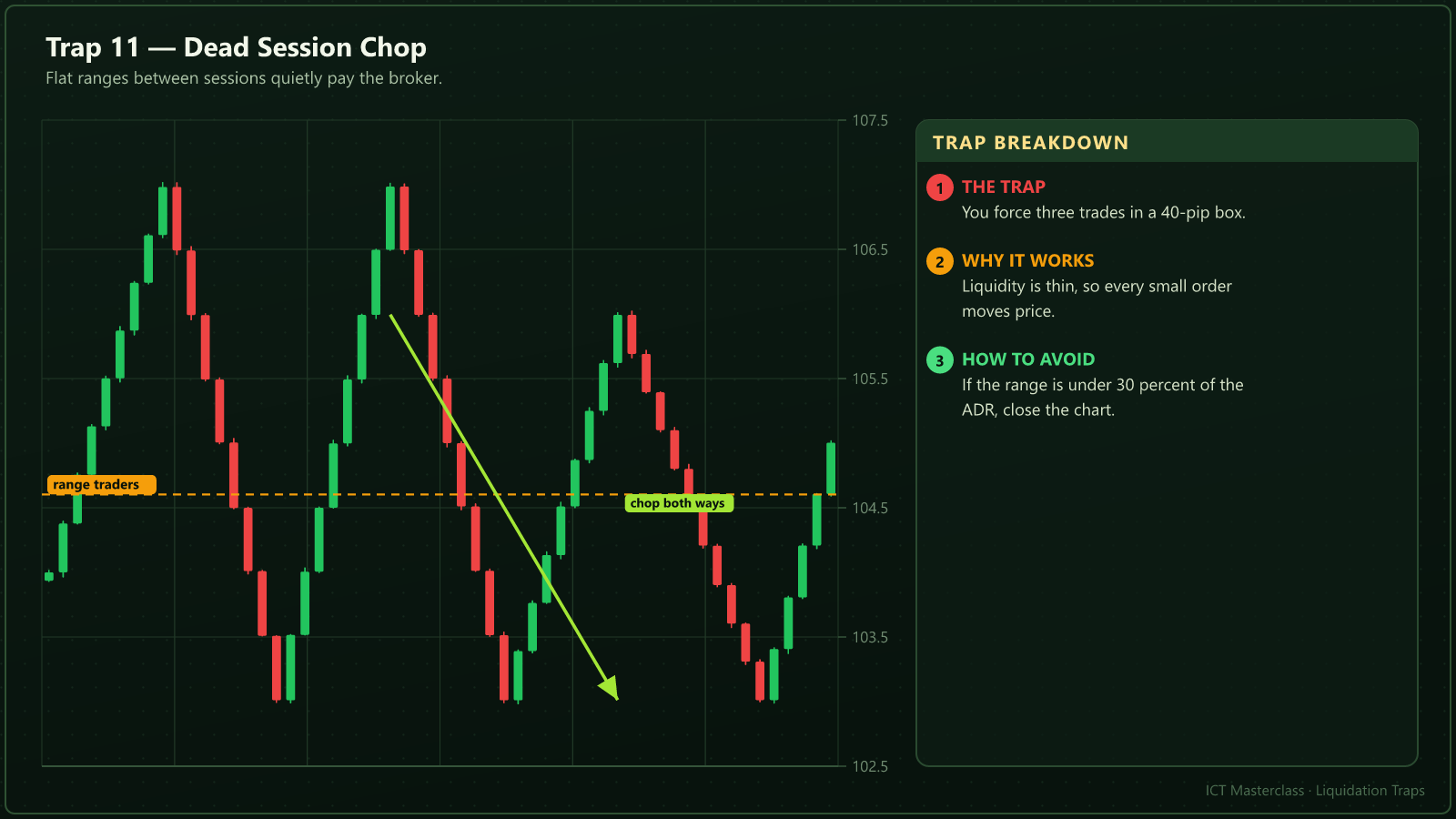
Dead Session Chop
Between sessions the range collapses; taking three trades there just pays the broker three times.
| Topic | Rule |
|---|---|
The trap | Forcing trades inside a 40-pip box. |
Why it works | Thin liquidity means small orders move price. |
How to avoid | If the range is under 30 percent of ADR, close the chart. |
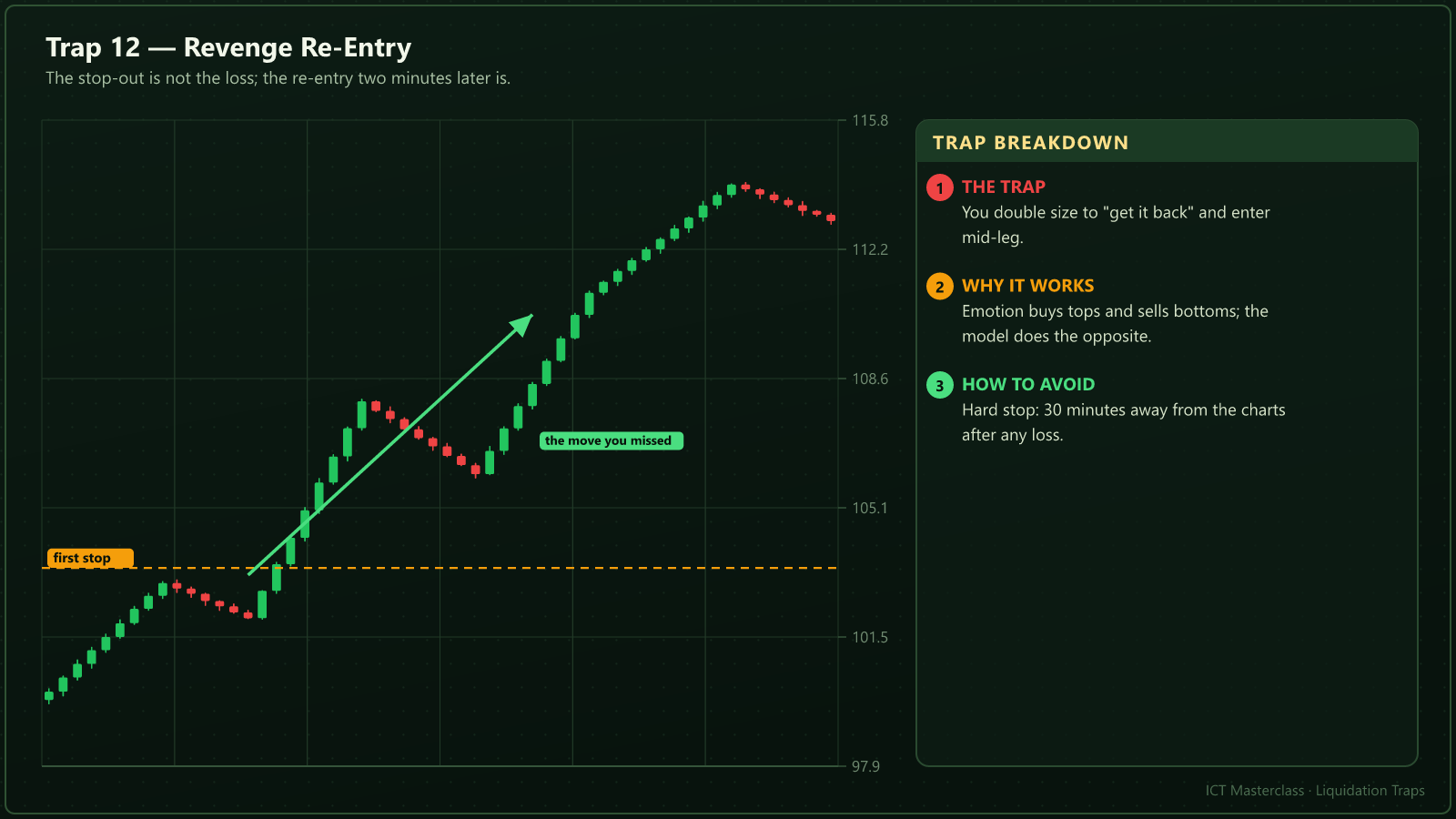
Revenge Re-Entry
The stop-out is not the loss; the double-size re-entry two minutes later is.
| Topic | Rule |
|---|---|
The trap | Bigger size right after a loss. |
Why it works | Emotion does the opposite of the model. |
How to avoid | Thirty minutes away from the charts after a loss. |
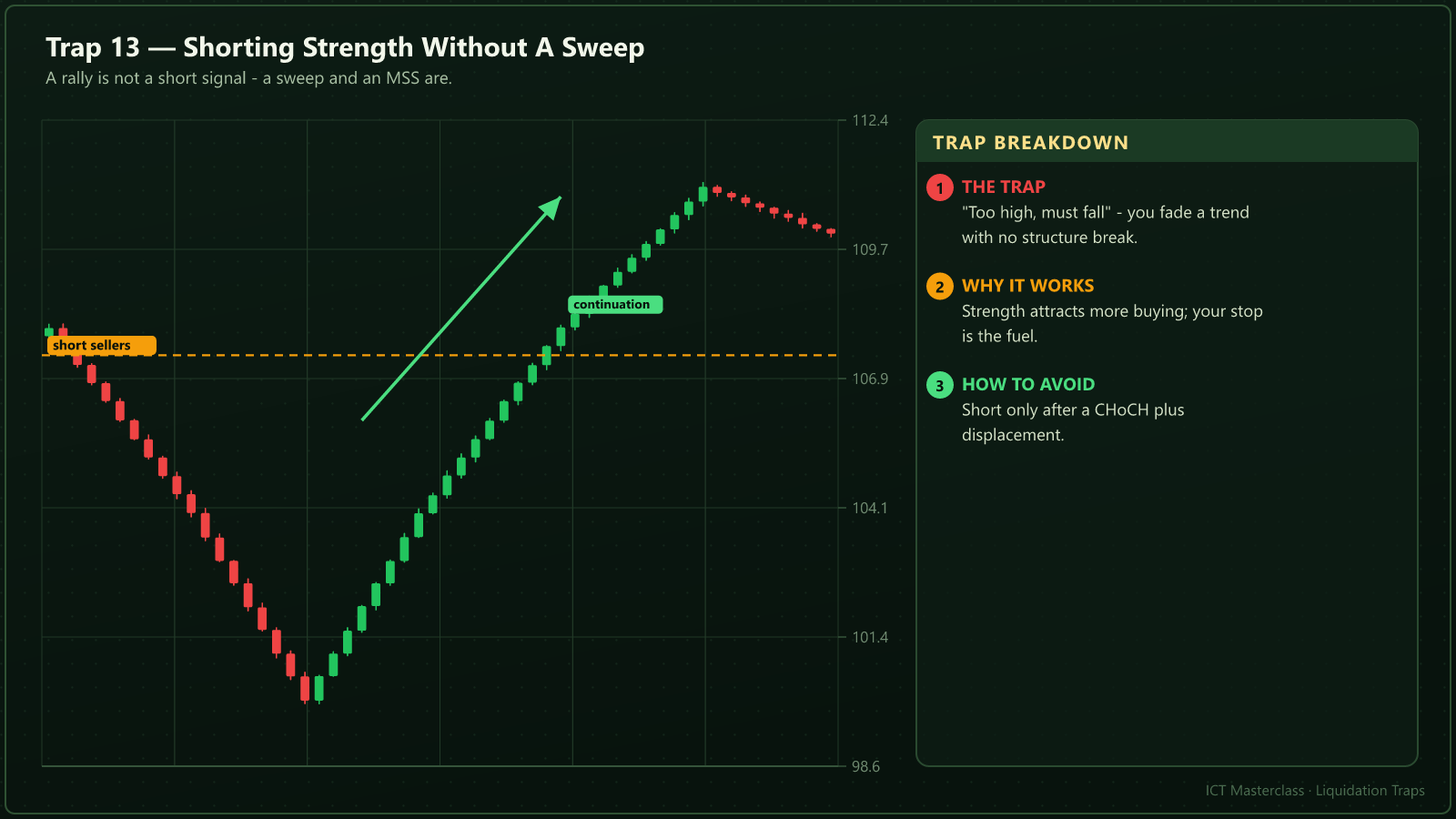
Shorting Strength Without A Sweep
"Too high, it must fall" without a sweep and an MSS is a guess, and your stop fuels the next leg.
| Topic | Rule |
|---|---|
The trap | Counter-trend with no CHoCH. |
Why it works | Strength attracts buyers and your stop becomes fuel. |
How to avoid | Short only after CHoCH plus displacement. |
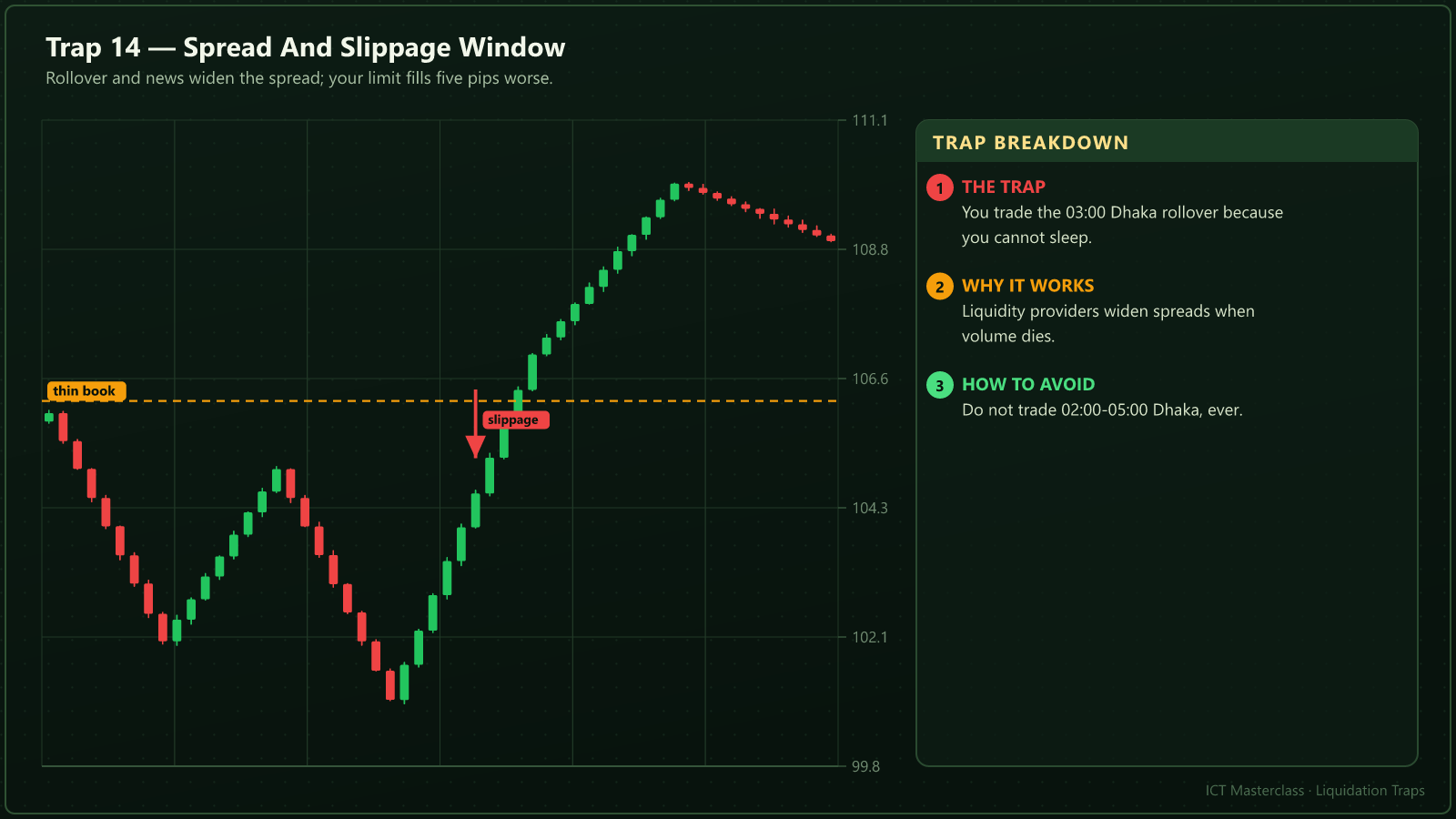
Spread And Slippage Window
Rollover and news widen the spread; your limit fills five pips worse and the stop gets hit early.
| Topic | Rule |
|---|---|
The trap | Trading the 03:00 rollover. |
Why it works | Spreads widen when volume dies. |
How to avoid | No trading between 02:00 and 05:00 Dhaka. |
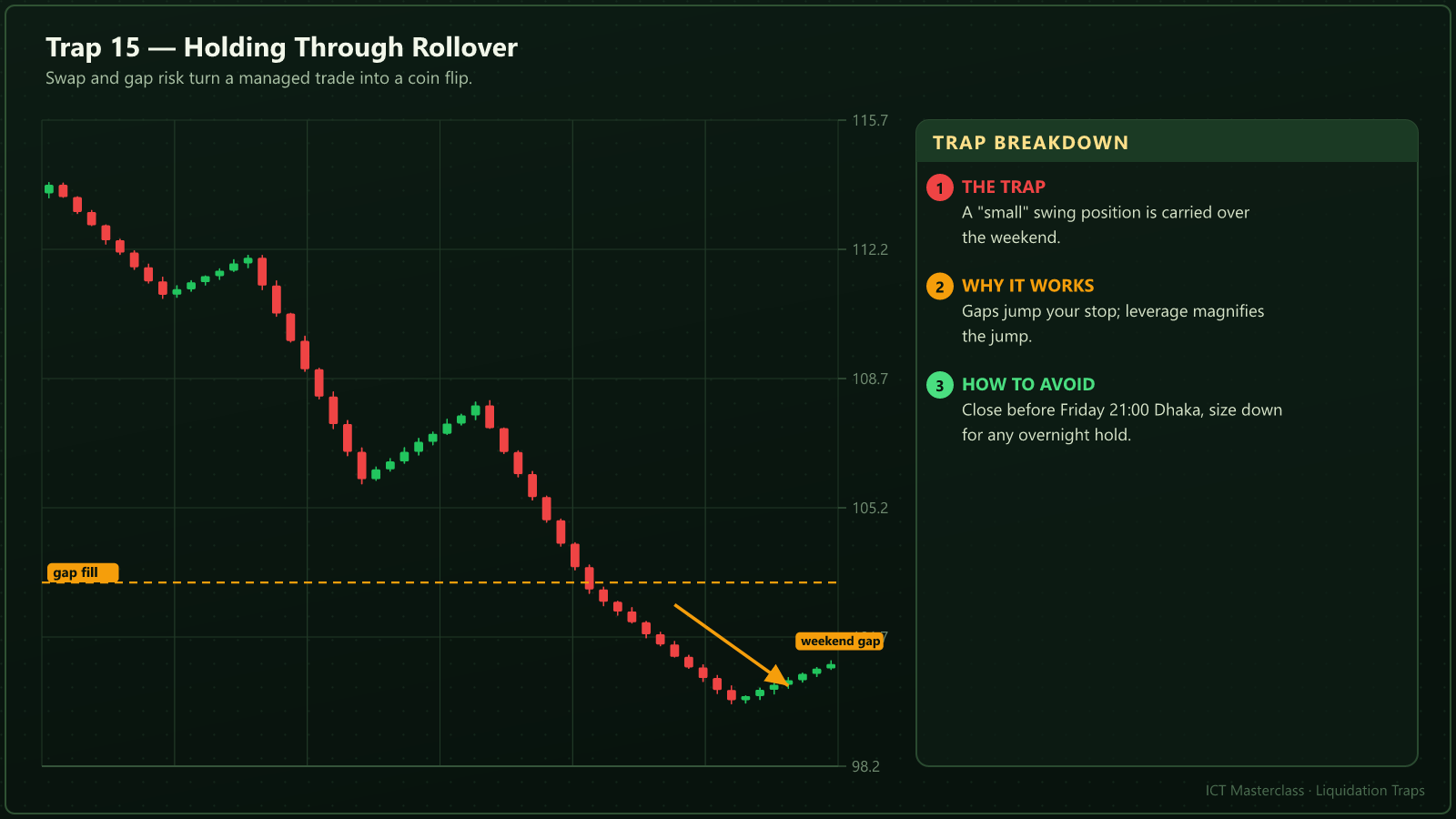
Holding Through Rollover
Swap and gap risk turn a managed trade into a coin flip, and leverage magnifies the jump.
| Topic | Rule |
|---|---|
The trap | Holding the position over Friday. |
Why it works | Your stop does not work while the market is closed. |
How to avoid | Flat before Friday 21:00 Dhaka. |
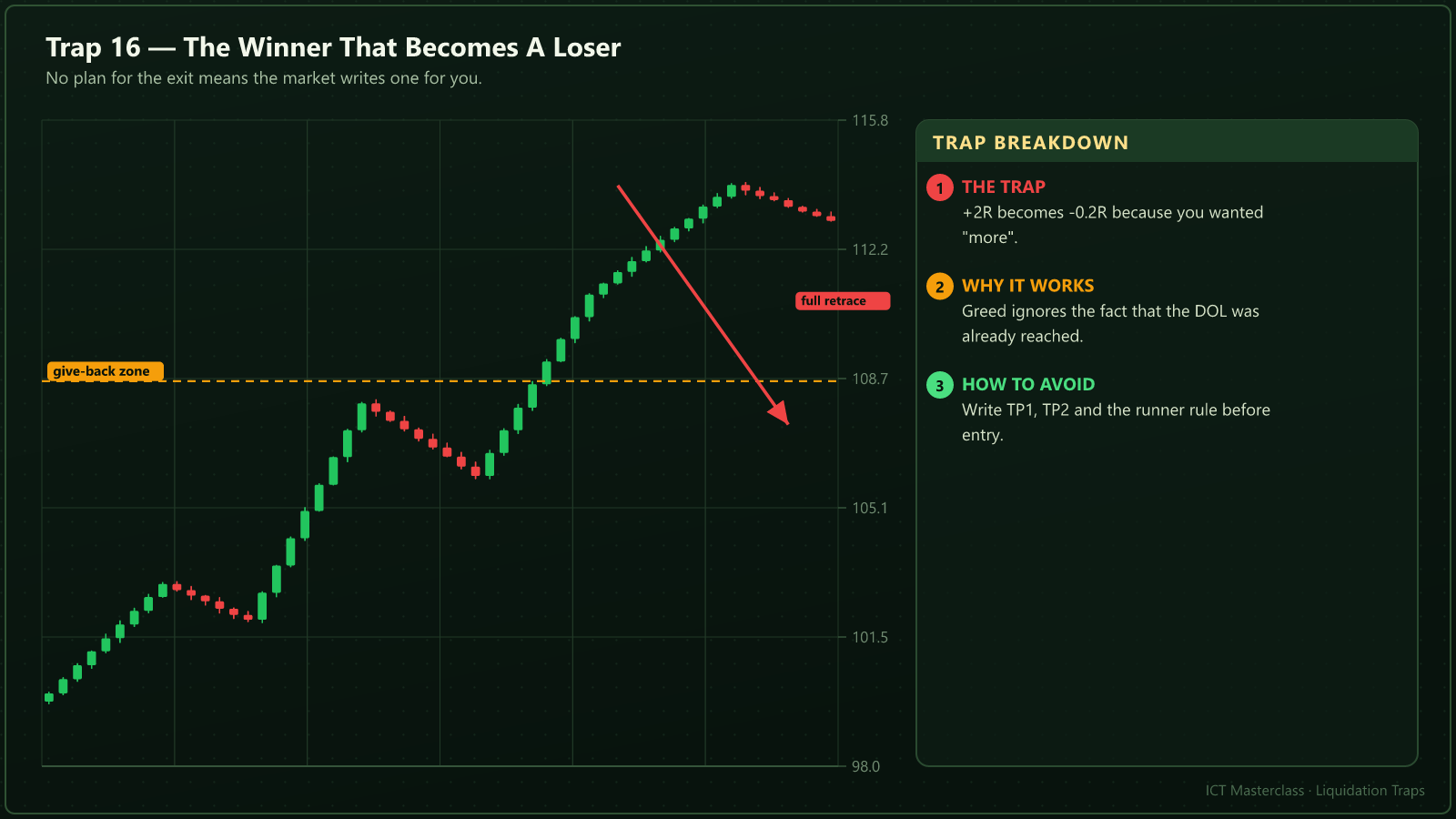
The Winner That Becomes A Loser
Without an exit plan the market writes one for you - usually turning +2R into -0.2R.
| Topic | Rule |
|---|---|
The trap | Holding because "it will go more". |
Why it works | Once the DOL is reached a new reason is needed. |
How to avoid | Write TP1, TP2 and the runner rule before entry. |
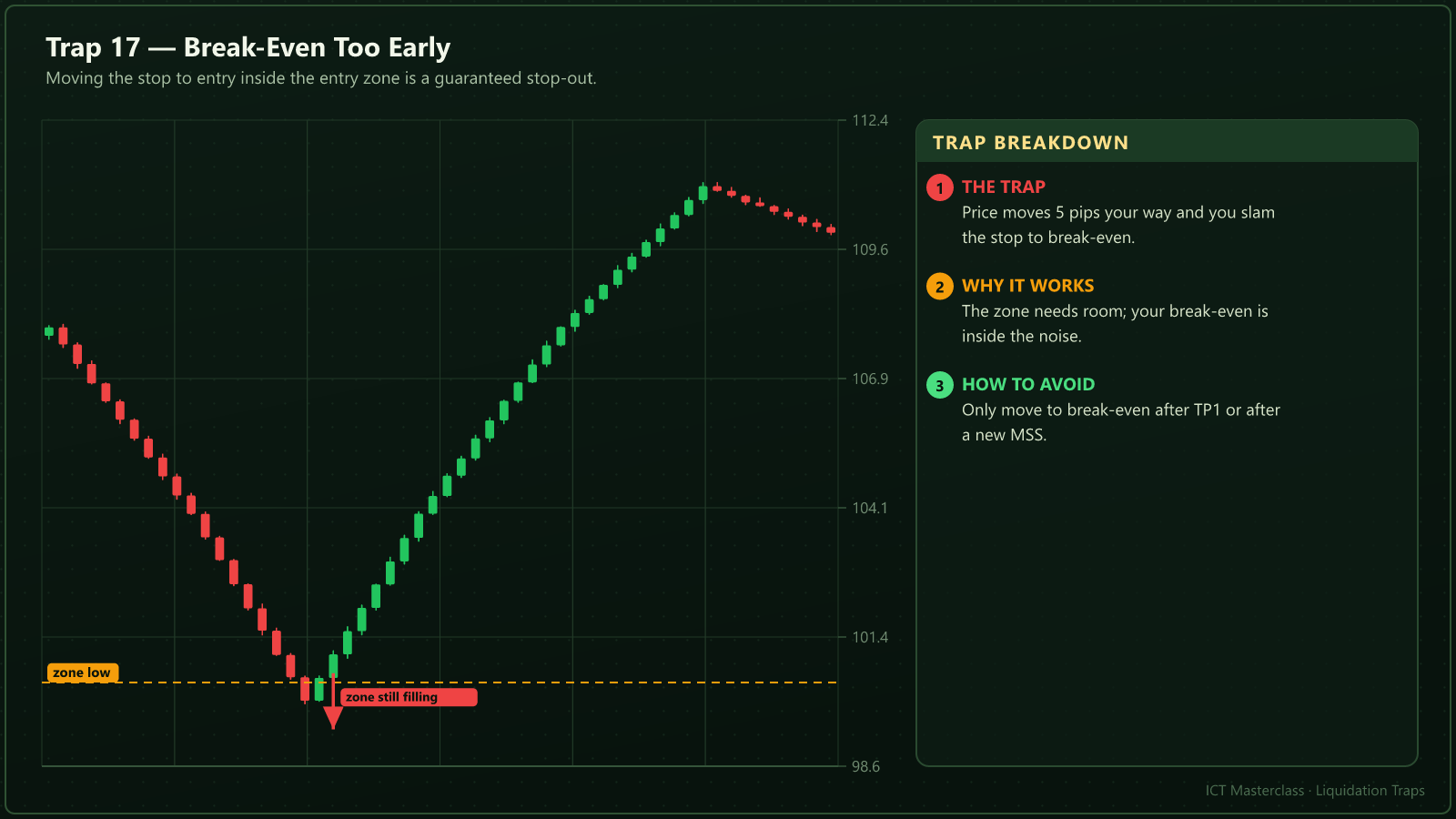
Break-Even Too Early
The zone is still filling, so your break-even stop sits inside the noise and the trade dies while still right.
| Topic | Rule |
|---|---|
The trap | Stop to entry after five pips. |
Why it works | Price always probes the zone before leaving. |
How to avoid | Break-even only after TP1 or a new MSS. |
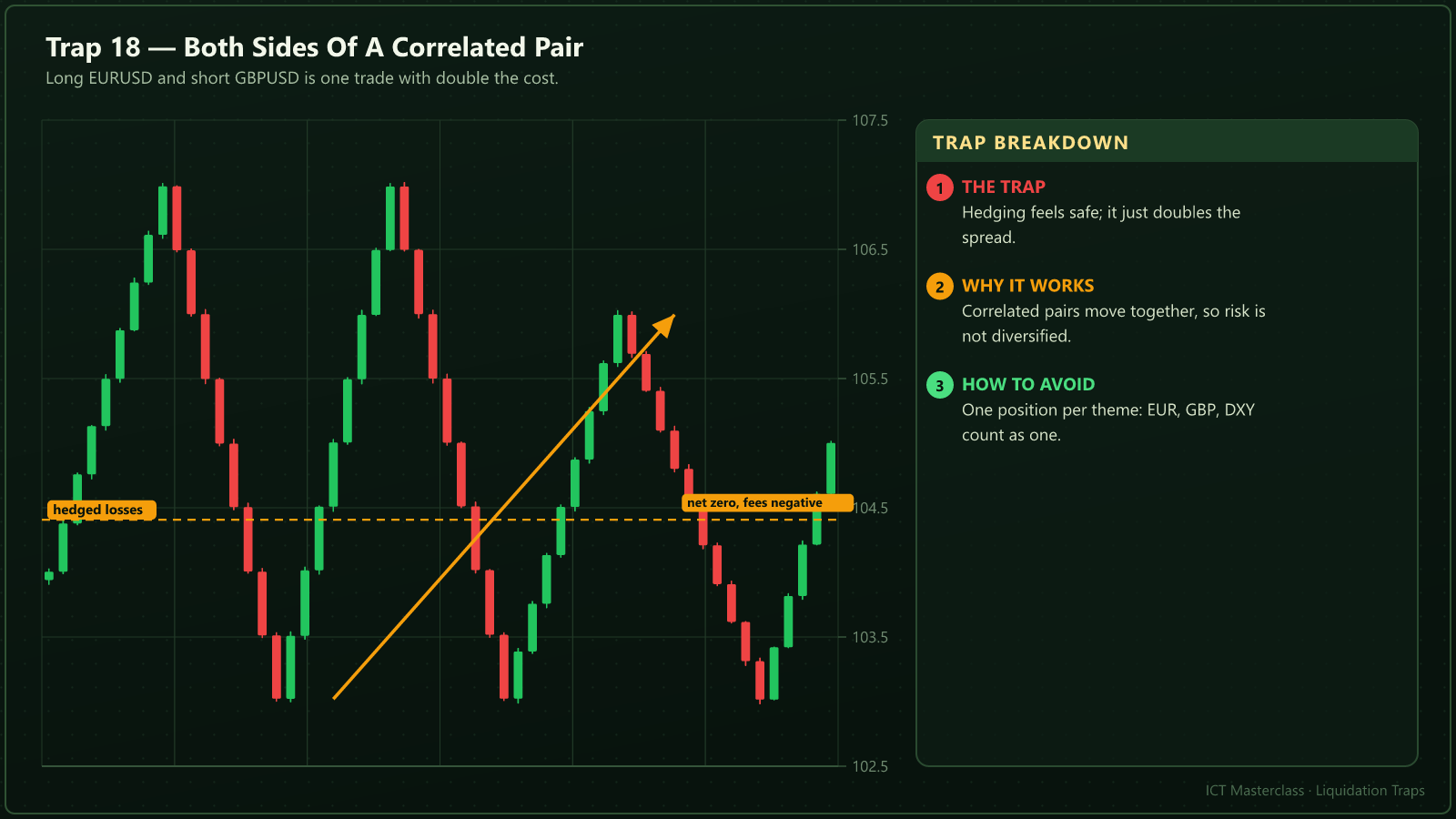
Both Sides Of A Correlated Pair
Long EURUSD plus short GBPUSD is one trade twice with double the spread: risk is not diversified.
| Topic | Rule |
|---|---|
The trap | Hedging with two correlated symbols. |
Why it works | Correlated pairs move together. |
How to avoid | EUR, GBP and DXY count as one risk unit. |
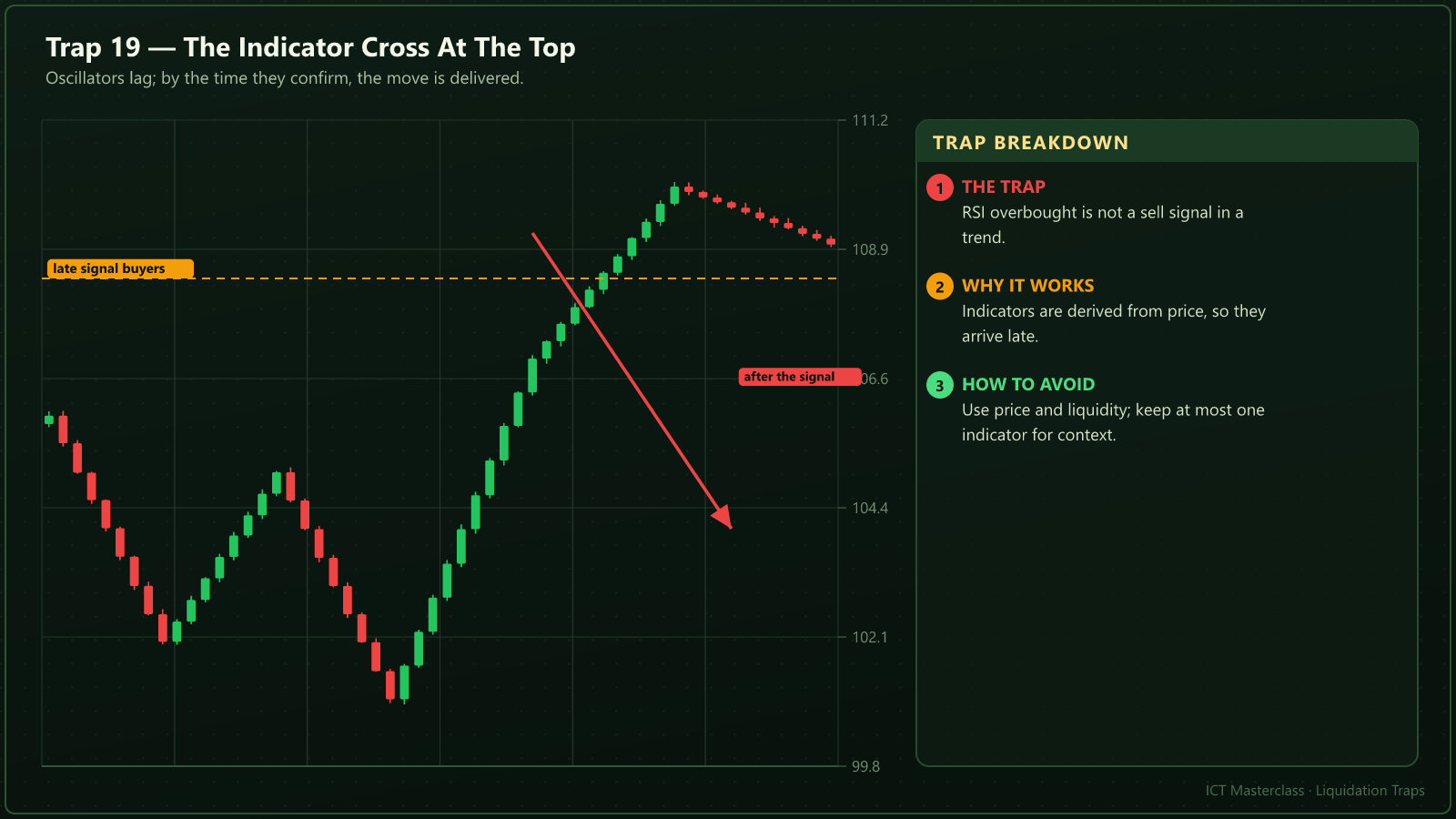
The Indicator Cross At The Top
Oscillators are derived from price, so they arrive late; by the time they confirm, the move is over.
| Topic | Rule |
|---|---|
The trap | Shorting an overbought RSI. |
Why it works | In a trend, overbought stays overbought. |
How to avoid | Use price and liquidity; one indicator at most. |
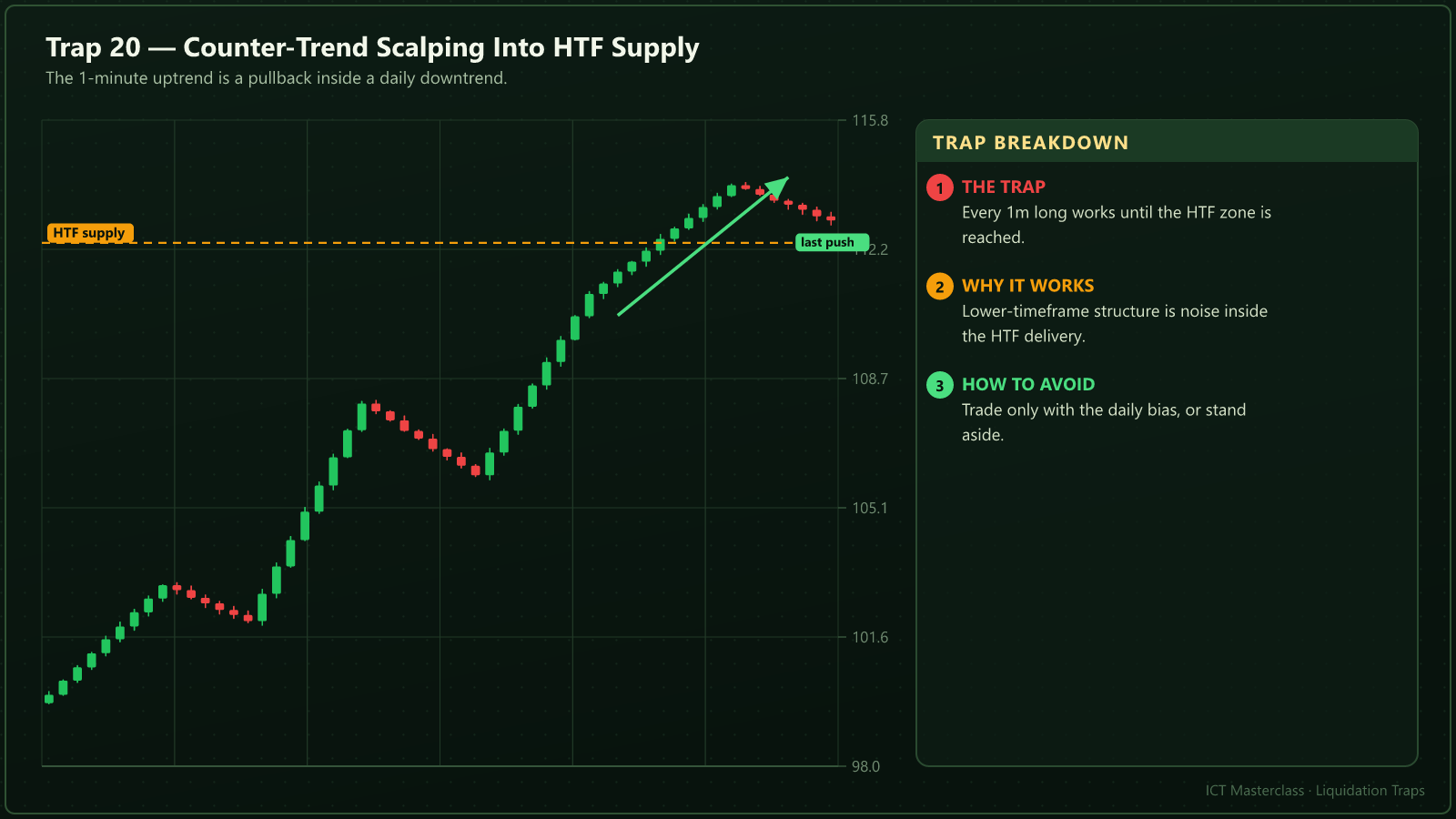
Counter-Trend Scalp Into HTF Supply
The 1-minute uptrend is a pullback inside a daily downtrend: every small long works until the HTF zone is reached.
| Topic | Rule |
|---|---|
The trap | Scalping without the HTF bias. |
Why it works | LTF structure is noise inside the HTF delivery. |
How to avoid | Trade with the daily bias or stay flat. |
Educational material only · not financial advice.