CHAPTER 14
Liquidation Zones 11-20
The last ten zones cover margin, sessions and correlation: why every position turns red at the same moment.
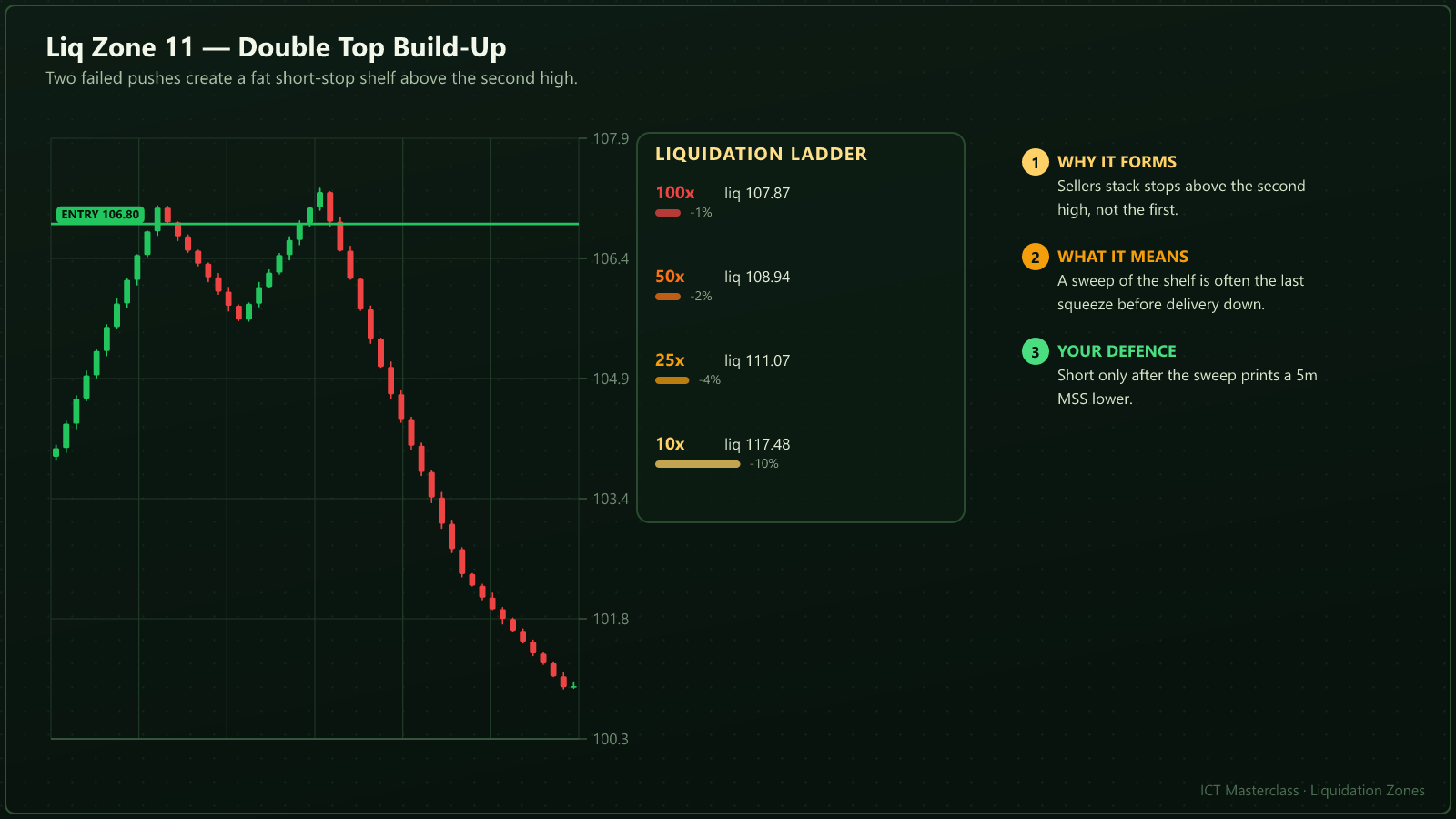
Double Top Stop Shelf
Sellers stack stops above the second high; sweeping that shelf is often the last step before delivery lower.
| Topic | Rule |
|---|---|
How it forms | Two failed pushes build short stops. |
What it means | The real drop starts after the shelf is taken. |
Your defence | No short until the sweep prints a 5m MSS. |
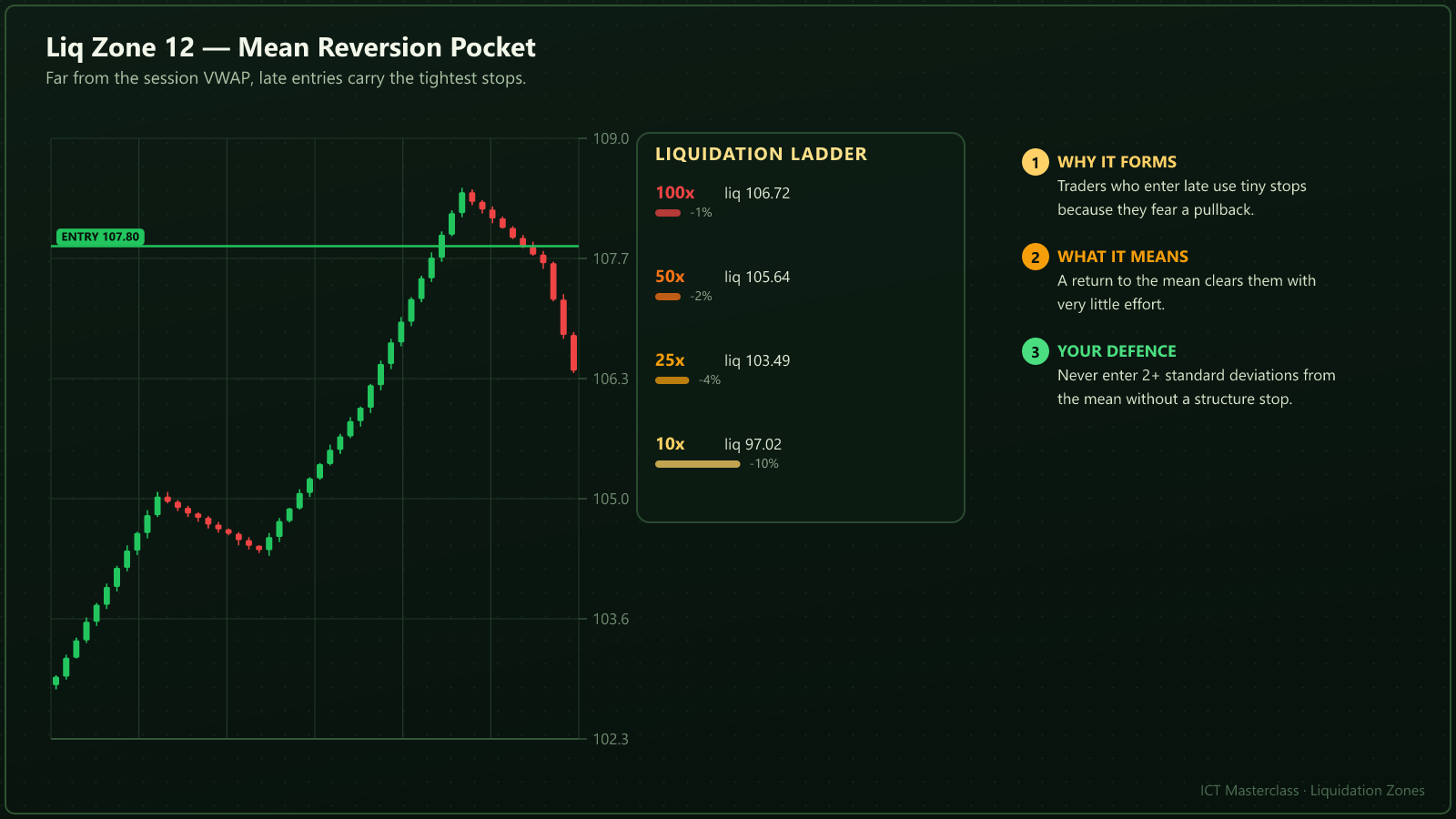
Mean Reversion Pocket
Late entries far from the mean use tiny stops, and the return to the mean clears them effortlessly.
| Topic | Rule |
|---|---|
How it forms | Late entry, tiny stop. |
What it means | The return to the mean is your liquidation. |
Your defence | No entry two standard deviations out without a structure stop. |
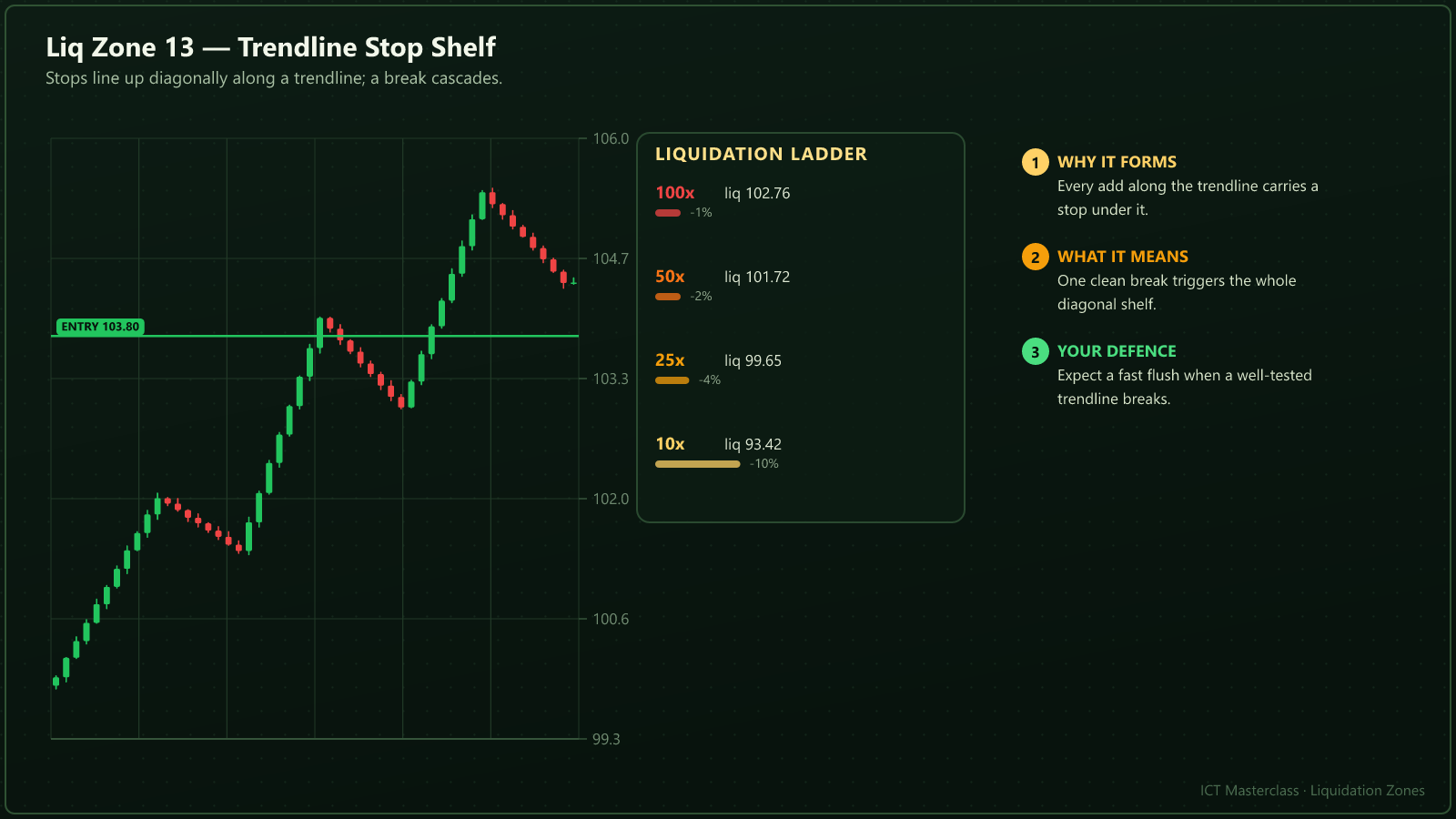
Trendline Stop Shelf
Each add along the trendline parks a stop beneath it, so one clean break triggers the whole shelf at once.
| Topic | Rule |
|---|---|
How it forms | Every add leaves a stop underneath. |
What it means | A break produces a fast flush. |
Your defence | Expect the flush when a well-tested line breaks. |
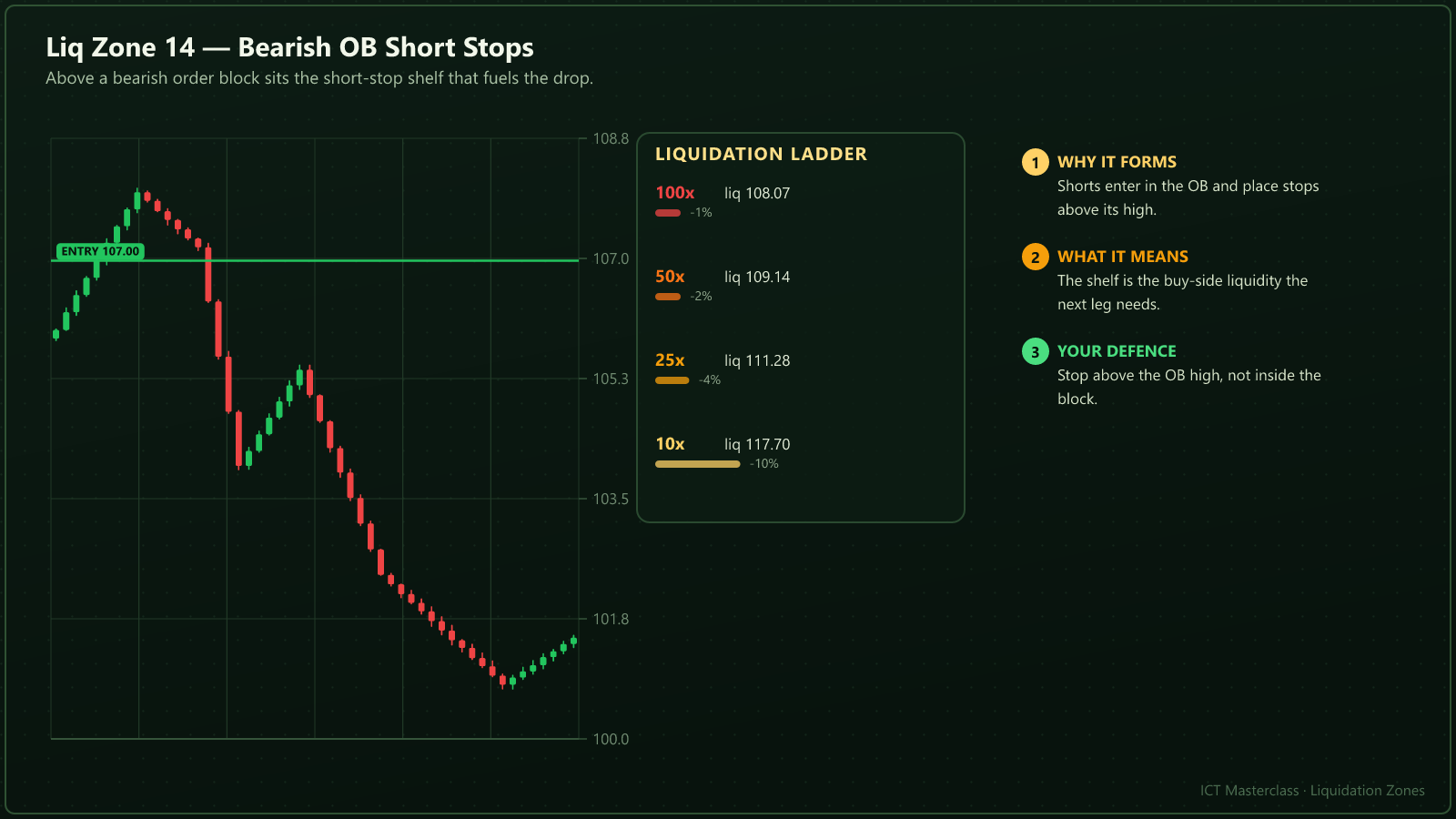
Bearish OB Short Stops
Shorts entering a bearish OB stop above its high, and that shelf is the buy-side liquidity the next leg needs.
| Topic | Rule |
|---|---|
How it forms | Stops collect above the OB high. |
What it means | Taking the shelf fuels the drop. |
Your defence | Stop above the OB high, never inside the block. |
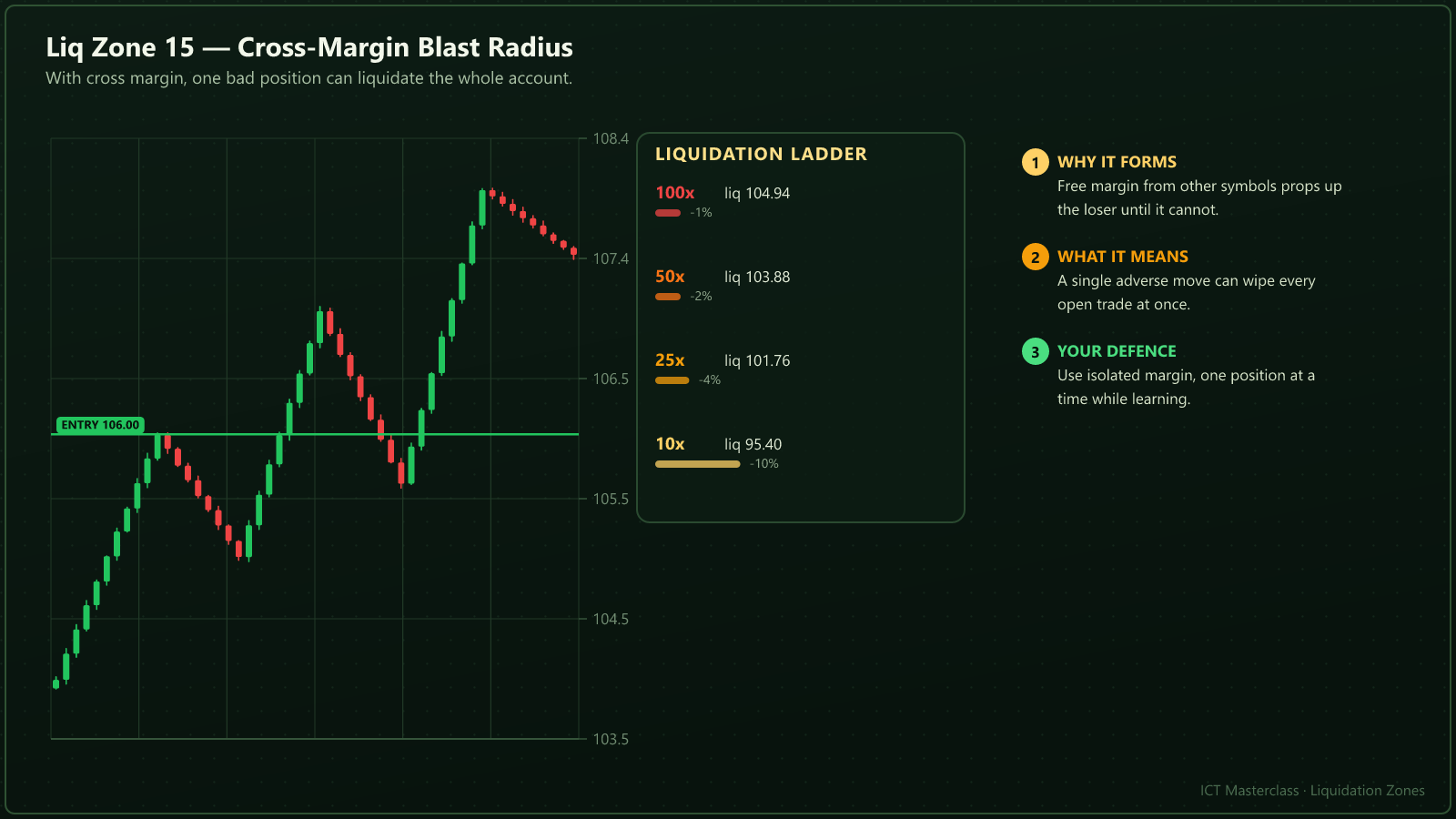
Cross-Margin Blast Radius
With cross margin the free margin from other symbols props up the loser - until the whole account goes.
| Topic | Rule |
|---|---|
How it forms | Multiple positions share one margin pool. |
What it means | One bad move closes everything at once. |
Your defence | Isolated margin and one position while learning. |
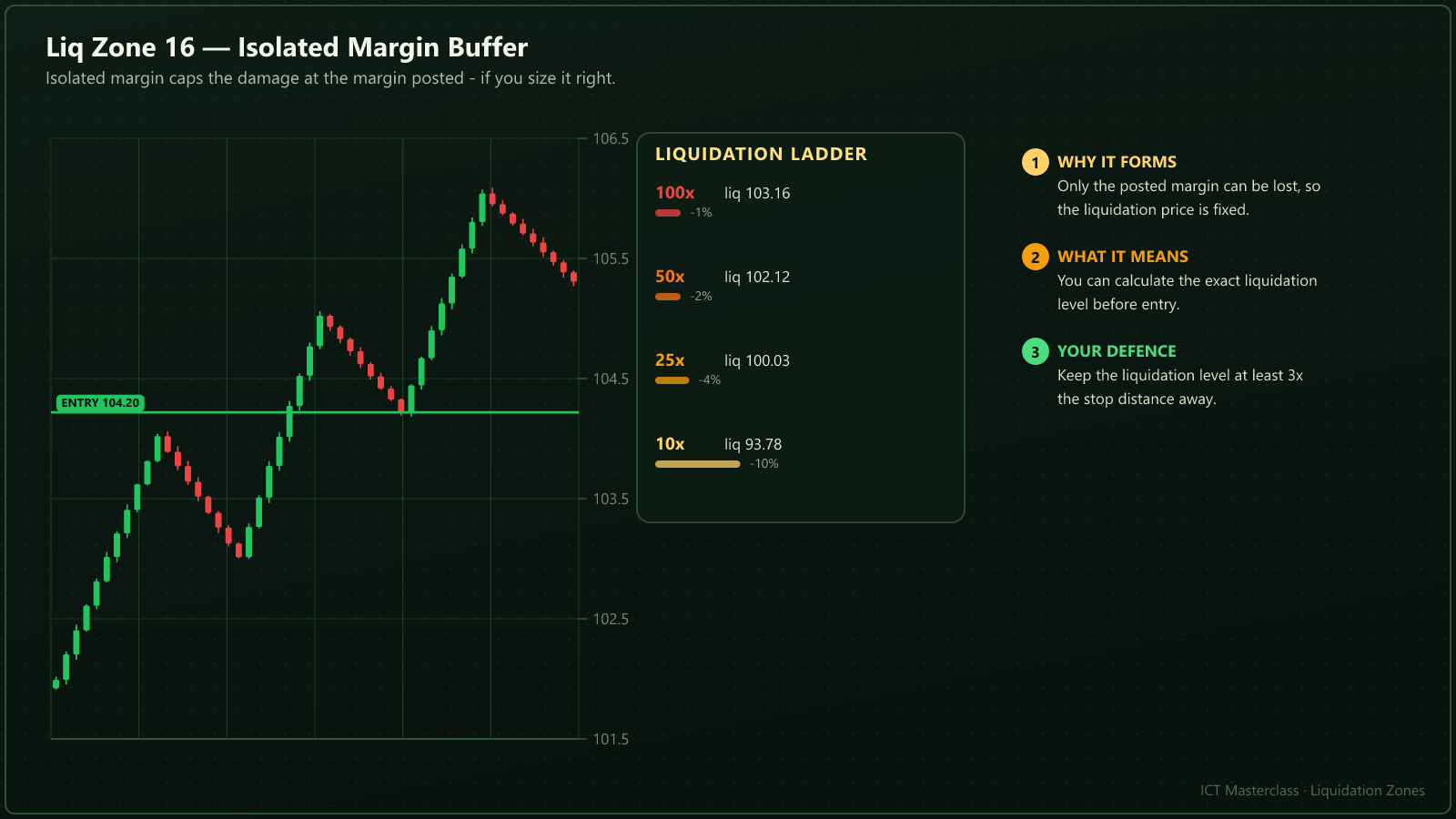
Isolated Margin Buffer
With isolated margin only the posted margin is at risk, so the liquidation price can be calculated in advance.
| Topic | Rule |
|---|---|
How it forms | Only the posted margin is at risk. |
What it means | The liquidation price is fixed and known. |
Your defence | Keep liquidation at least three times the stop distance away. |
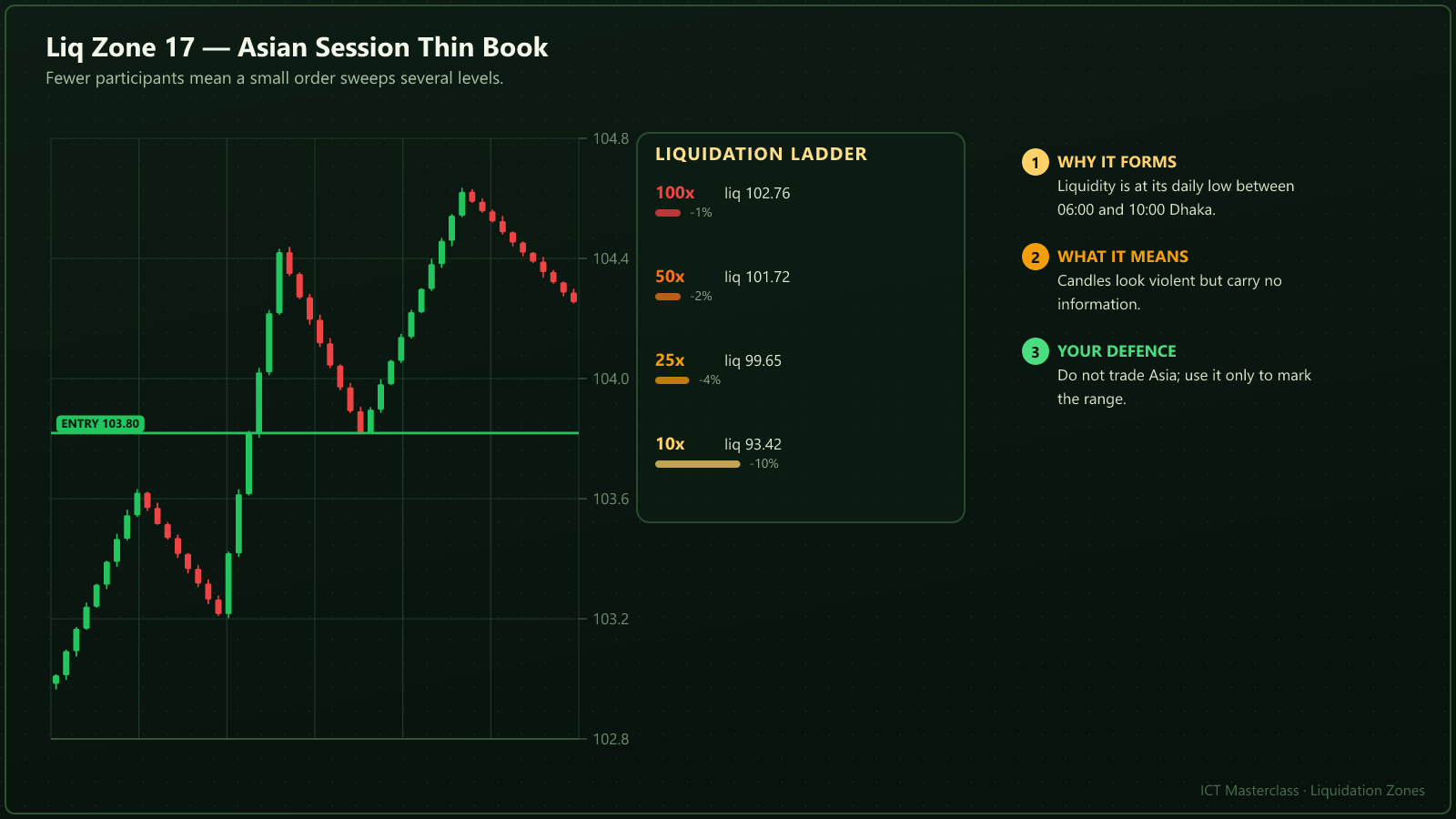
Asian Session Thin Book
Between 06:00 and 10:00 Dhaka few participants remain, so small orders cross several levels: violent candles with no information.
| Topic | Rule |
|---|---|
How it forms | The lowest liquidity of the day. |
What it means | A big candle does not mean big news. |
Your defence | Do not trade Asia; only mark the range. |
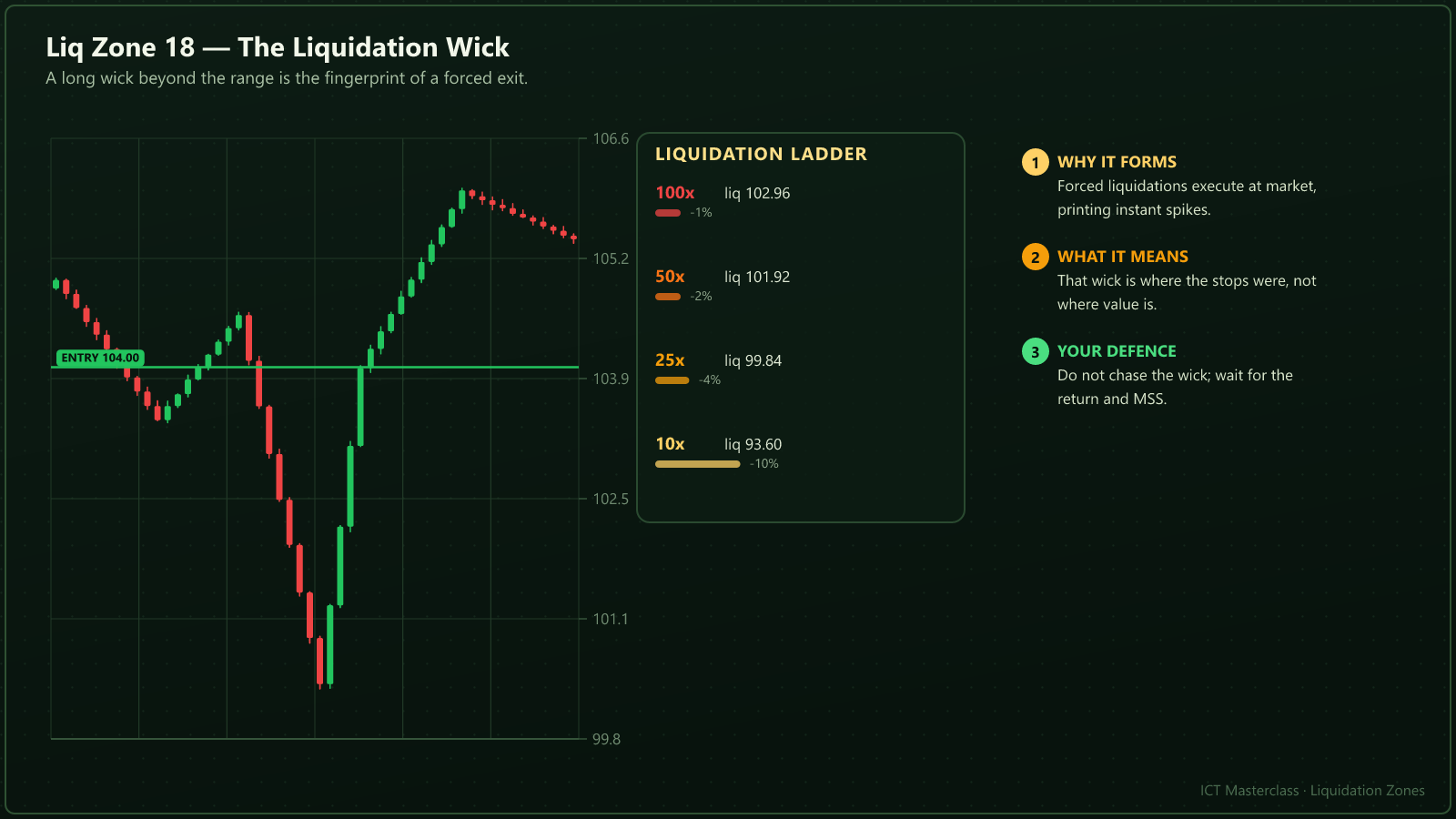
The Liquidation Wick
A long wick outside the range is the fingerprint of forced exits: not value, just where the stops were.
| Topic | Rule |
|---|---|
How it forms | Forced market orders print instant spikes. |
What it means | The wick is a memory, not a price. |
Your defence | Do not chase the wick; wait for the return and MSS. |
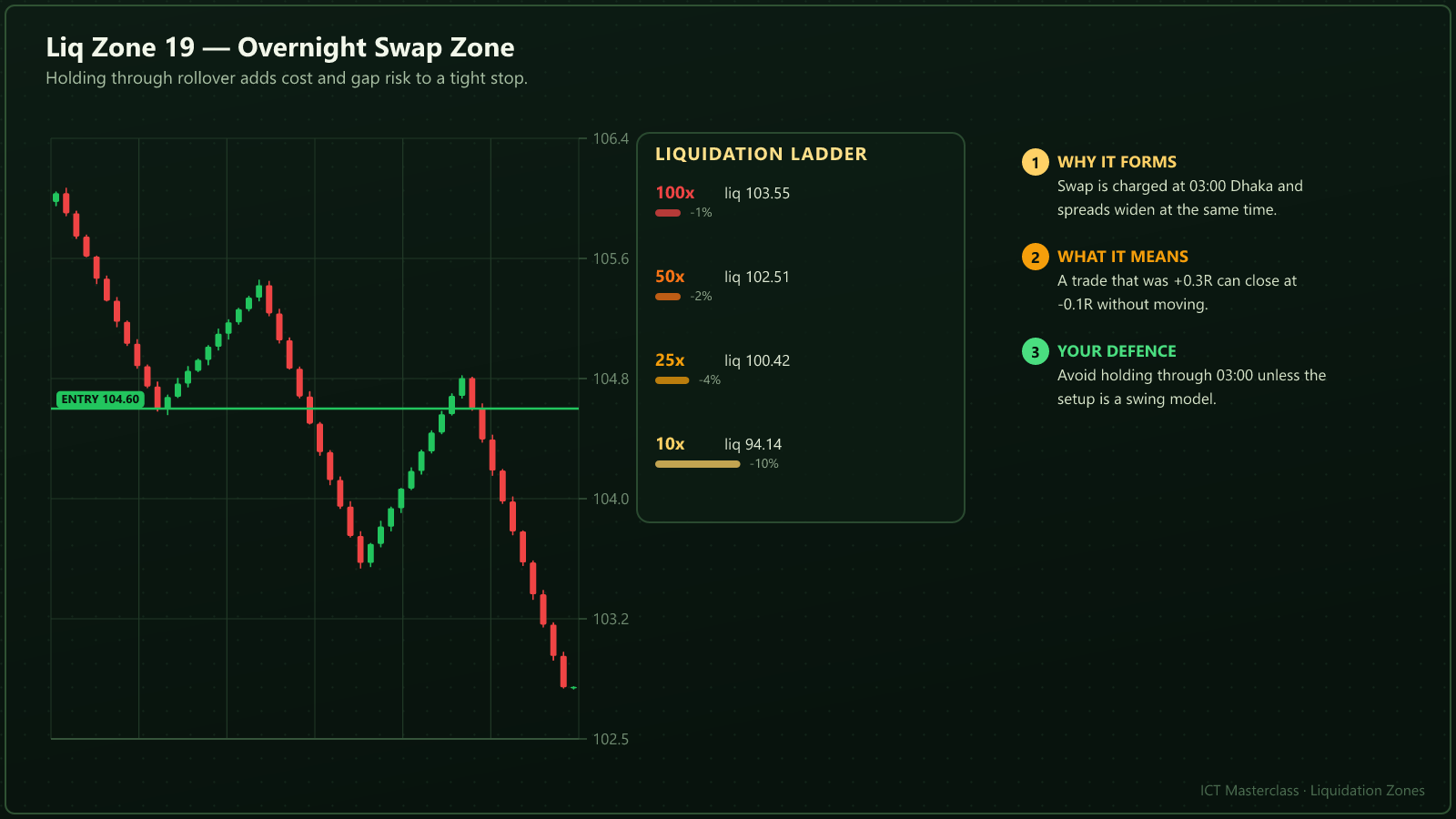
Overnight Swap Zone
Swap is charged at 03:00 Dhaka and spreads widen at the same moment: a tight-stop trade turns into a loss without moving.
| Topic | Rule |
|---|---|
How it forms | Swap and spread both hit at rollover. |
What it means | A +0.3R trade can close at -0.1R. |
Your defence | No overnight position outside a swing model. |
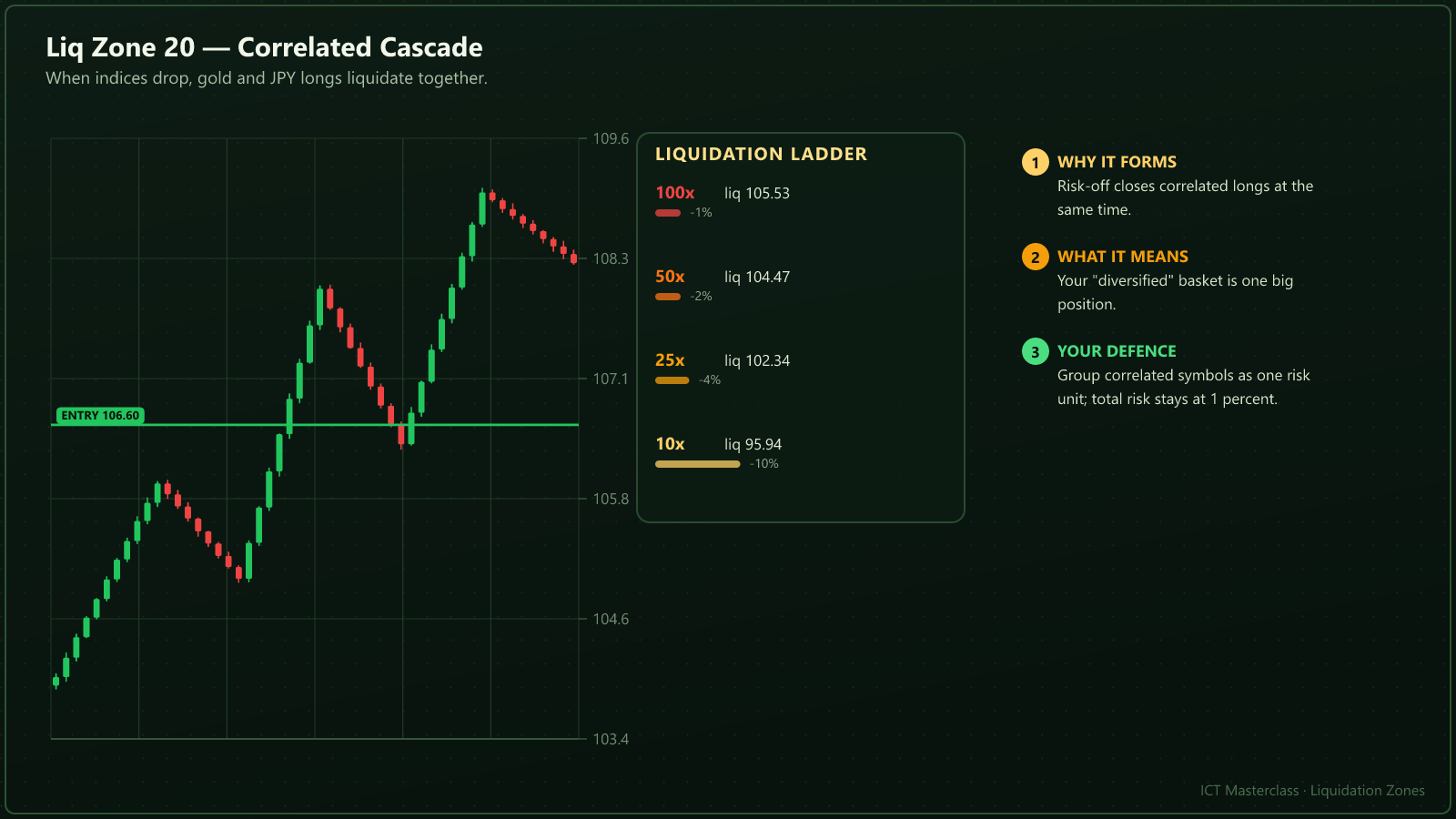
Correlated Cascade
On risk-off, index, gold and JPY longs close together: your diversified basket is one large position.
| Topic | Rule |
|---|---|
How it forms | Same-theme positions close together. |
What it means | Total risk adds up instead of diversifying. |
Your defence | Correlated symbols are one unit: total one percent. |
14.21Liquidation Self-Test - 10 Questions
Answer first, then check. Eight or more correct means you are safe from the liquidation trap.
| Question | Answer |
|---|---|
At 50x, how far is liquidation from entry? | About 2 percent - ordinary noise does it. |
Your stop is 5 pips above equal highs. What happens? | The sweep takes it: that is liquidity. |
Three positions on cross margin - total risk? | They add up; there is no diversification. |
What does a 10 percent move mean at 10x? | The whole margin is gone: liquidation. |
Enter two minutes before news? | No; the spread and spike will take the stop. |
What if price moves against you? | Never move it; the position closes. |
Risk of holding over the weekend? | A gap jumps the stop and fills at a worse price. |
How do you know liquidation in advance? | Isolated margin plus the leverage maths. |
Worst case over 100 trades at 1 percent? | Around 63 percent theoretically, worse in practice. |
Best liquidation defence? | Leverage 5-10x, 0.5 percent risk, structure stop. |
Educational material only · not financial advice.